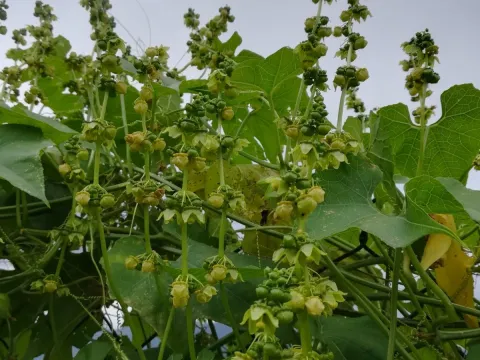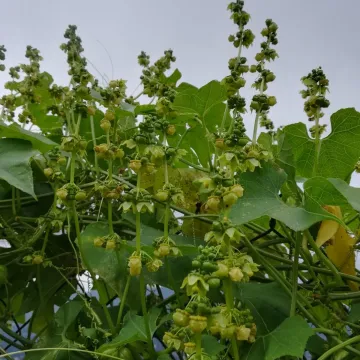
Sechiopsis triquetra
Sechiopsis triquetra
Description
Sechiopsis triquetra is an intriguing herbaceous climbing vine belonging to the Cucurbitaceae family. While it shares many morphological characteristics with its more famous relative, the chayote (Sechium edule), it possesses distinct features that define its unique identity within the diverse squash family.
The plant originates from the mountainous regions of Mexico and Central America. Its native habitat typically includes humid, forested areas where it can climb trees and shrubs to reach sunlight. Due to these specific environmental requirements, its cultivation is largely concentrated in regions with tropical or subtropical climates, where the absence of frost is guaranteed throughout the growing season.
Botanically, the plant is characterized by a vigorous growth habit, utilizing specialized tendrils to scale vertical surfaces. The leaves are typically cordate, and the flowers are relatively small but produced in abundance. The most distinctive feature is its fruit, which is three-angled—a trait that gives the species its scientific name. These fruits contain seeds that are nutrient-dense, supporting the seedling's rapid early growth.
Successful cultivation requires deep, well-draining soils with high organic matter content. Sechiopsis triquetra is highly sensitive to soil moisture fluctuations; it demands consistent watering but suffers immediately from waterlogging. The optimal temperature range for development is between 20°C and 25°C. Agricultural management must include robust trellising systems, as allowing the vines to sprawl on the ground significantly increases the risk of fruit rot.
Economically, the plant is utilized primarily for its edible fruits, which can be prepared in various culinary styles, often replacing cucumbers or squash in local diets. In some communities, the tender stems and tubers are also consumed. Typical pests include aphids and spider mites, which require integrated pest management. Diseases such as powdery mildew and anthracnose are common, particularly in high-humidity conditions, and require adequate spacing to ensure proper airflow.
Photo gallery