Marking nut
Semecarpus anacardium
Description
Semecarpus anacardium, commonly known as the Marking nut, is a deciduous tree belonging to the Anacardiaceae family. It is botanically related to the well-known cashew nut and is indigenous to the tropical regions of India and Southeast Asia. The plant is historically significant for its versatile sap, used traditionally for marking textiles.
The tree typically grows in forests and hilly terrains, thriving in tropical climates where the temperature remains consistently high throughout the year. It exhibits moderate growth rates and requires ample sunlight to develop a healthy canopy and produce high-quality fruit. It is well-adapted to regions with distinct wet and dry seasons.
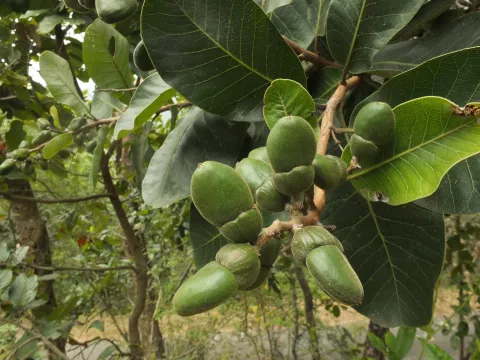
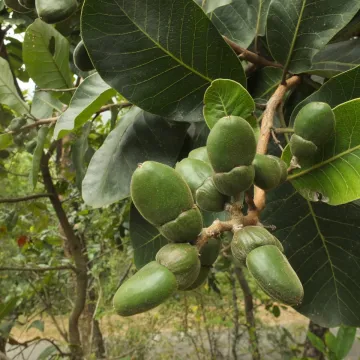
Botanically, the tree features large, coriaceous leaves and produces distinctive fruits. The fruit consists of a fleshy receptacle and a nut containing a caustic, toxic oil. During the maturation phase, the color of the fruit changes, signaling readiness for harvest. Careful handling is necessary due to the vesicant nature of the nut's shell oil.
Agricultural success depends on providing well-drained, nutrient-rich soil and adequate water management. While it is a relatively hardy species once established, young trees require protection from direct harsh winds and frost. Pest management focuses on controlling common tropical beetles and leaf-eating insects that can compromise the tree's vitality.
Industrially, the marking nut is valued for its pharmacological potential and technical applications. Its extracts are studied for their antimicrobial properties in traditional medicine. Furthermore, the oil extracted from the pericarp is utilized in the manufacturing of durable varnishes and specialized industrial fluids, showcasing its economic importance.
- Family: Anacardiaceae
- Native Habitat: Tropical forests of Asia
- Key Characteristics: Vesicant sap, edible kernel (after processing)
- Agricultural Focus: Tropical orchard management
- Primary Uses: Industry, traditional medicine
Photo gallery