Senna sophera
Senna sophera
Description
Senna sophera is a perennial shrub belonging to the Fabaceae family. It is widely recognized in tropical and subtropical regions for its ecological resilience and medicinal properties. Known botanically as a close relative of various senna species, it plays a significant role in traditional land management and local phytotherapy.
The plant originates from tropical zones in Asia, Africa, and Australia. Its distribution across various continents is attributed to its adaptability to diverse soil types, including sandy, loamy, and clay-rich substrates. It thrives in open sunlight, which is crucial for the development of its vegetative parts and seed production.
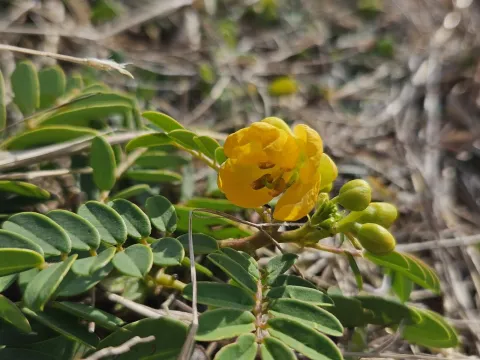
In terms of morphology, the plant features pinnate leaves and distinctive yellow inflorescences. The fruit is a long, compressed pod containing numerous seeds. These seeds are responsible for the natural propagation of the species and are the primary focus when considering the plant for commercial harvest or medicinal extraction.
The agronomy of Senna sophera requires attention to soil drainage and thermal management. The crop does not tolerate waterlogging, which often leads to root rot, the most common pathological issue. Farmers typically manage the crop by ensuring proper spacing to improve airflow, which prevents fungal outbreaks such as powdery mildew or rust.
Economically, this species is utilized in the pharmaceutical industry due to the presence of secondary metabolites like anthraquinones. Furthermore, in agricultural systems, it serves as a valuable nitrogen-fixing agent, contributing to soil fertility improvement. It is also explored as a potential source of biomass for sustainable agricultural practices.
- Excellent tolerance to high temperatures
- Rich source of medicinal anthraquinones
- Effective for soil erosion control
- Facilitates nitrogen fixation through symbiosis
Photo gallery