Coast redwood
Sequoia sempervirens (D. Don) Endl.
Description
Coast redwood (Sequoia sempervirens) is a significant coniferous species within the Cupressaceae family. Renowned globally as the tallest tree species, it serves as a critical subject for silviculture and dendrology, prized for its exceptional growth rate and the high quality of its biological and structural properties.
The native range of this species is restricted to the narrow coastal strip of the Pacific Northwest in North America. Cultivation success depends heavily on emulating these maritime conditions, which are characterized by high atmospheric humidity and the prevalence of cooling fog, essential for maintaining the tree's physiological balance during dry summer months.
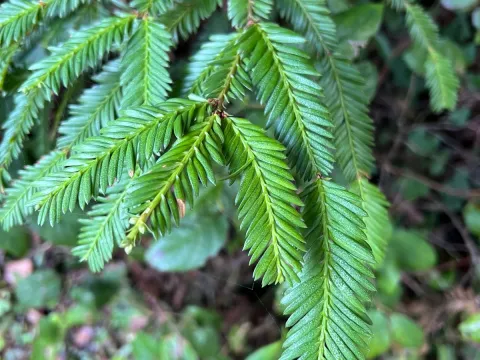
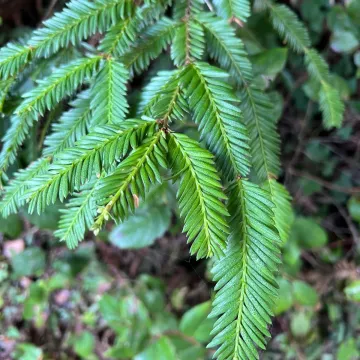
Botanically, the species is defined by its massive trunk protected by thick, fibrous bark rich in tannins, which provides natural immunity against fire and most pathogenic organisms. The foliage consists of flat, needle-like leaves arranged in two ranks, creating a dense, evergreen canopy that remains functional throughout the year.
Agricultural requirements include deep, moisture-retentive, and well-drained soils with a slightly acidic profile. In nursery and plantation settings, it is crucial to ensure consistent moisture levels and protection from intense, direct solar radiation during the establishment phase. While the tree is remarkably hardy once mature, young specimens require careful monitoring of soil health and nutritional status.
The commercial value of Coast redwood is primarily centered on its timber, which is highly sought after for its durability, resistance to rot, and aesthetic properties. Beyond industrial timber production, the species is cultivated for carbon sequestration and as a cornerstone of large-scale landscape architecture in regions mirroring its native climatic regime.
- Inherent resistance to decay due to high tannin content.
- High sensitivity to soil compaction and waterlogging.
- Susceptibility to scale insects and spider mites in nursery environments.
Photo gallery