Giant sequoia
Sequoiadendron giganteum (Lindl.) J. Buchholz
Description
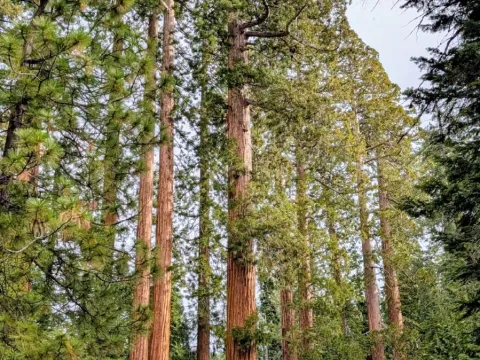
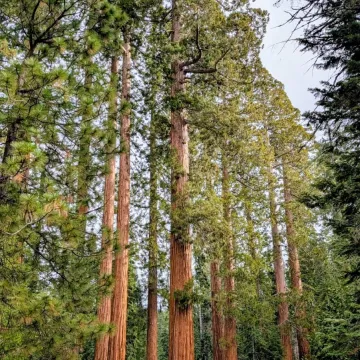
The giant sequoia (Sequoiadendron giganteum) is a massive evergreen conifer belonging to the Cupressaceae family. Renowned for being one of the largest trees on Earth, this species represents a pinnacle of biological adaptation to mountainous forest ecosystems, characterized by its immense girth and impressive height.
Native to the western slopes of the Sierra Nevada mountains in California, the giant sequoia is now cultivated in various temperate regions worldwide. While its natural range is restricted, its adaptability allows it to thrive in botanical gardens and forestry plantations where specific microclimates mimic its indigenous environment.
Botanically, the species is defined by its reddish-brown fibrous bark and scale-like leaves. It exhibits a remarkable reproductive strategy involving serotinous cones that rely on seasonal cycles or environmental triggers to disperse seeds. This resilience allows the tree to maintain dominance in its natural habitat for centuries.
Successful cultivation requires deep, well-draining, and nutrient-rich soils. The species demands consistent soil moisture, especially during its formative years. In terms of agronomy, providing a layer of organic mulch and ensuring adequate protection against frost damage are critical components of maintaining the health of young saplings.
Regarding its utility, the giant sequoia is primarily valued for its historical, scientific, and aesthetic significance. Its timber is highly resistant to decay; however, due to conservation efforts, it is predominantly managed for educational purposes and landscape architecture rather than large-scale industrial harvesting.
- Low susceptibility to common forest pests.
- Strict requirement for proper soil aeration.
- High tolerance to fire due to thick bark layers.
- Vulnerability to fungal pathogens in poorly drained sites.
Photo gallery