Three-leaf sesame
Sesamum triphyllum
Description
Three-leaf sesame (Sesamum triphyllum) is an annual herbaceous plant belonging to the Pedaliaceae family. While less commercially widespread than Sesamum indicum, this species is highly valued in botanical research for its drought tolerance and genetic diversity, serving as a vital resource for breeding programs.
The plant is native to tropical and southern Africa, where it has evolved to thrive in diverse environments, ranging from sandy savannas to disturbed soil habitats. Its natural range demonstrates a high degree of resilience, allowing it to survive in regions characterized by erratic rainfall and extreme thermal shifts.
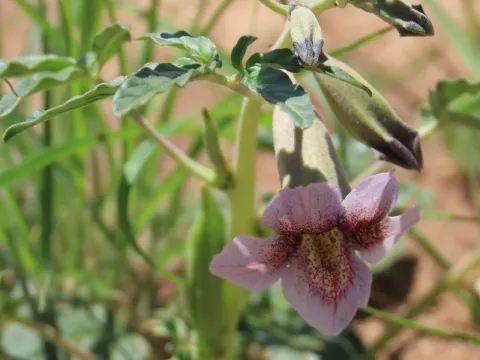
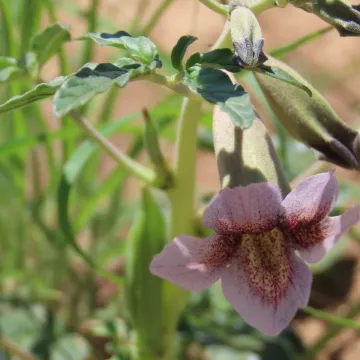
Botanical identification is based on its distinct leaf morphology, often featuring three leaflets, alongside a hairy, erect stem structure. The plant produces zygomorphic flowers that develop into dehiscent capsules. Inside these capsules, the plant stores small, nutrient-dense seeds containing high-quality oil and proteins.
Agricultural cultivation requires well-drained, porous soil to prevent root rot, as the species is particularly sensitive to waterlogging. It performs best in full sun exposure and is highly adapted to tropical heat. Proper spacing is essential to ensure adequate airflow and reduce the incidence of fungal diseases during the growth cycle.
The primary economic value of this crop lies in its potential for sustainable oil production in arid zones. Key agronomic concerns include:
- Management of soil moisture to prevent fungal pathogens.
- Monitoring for aphids and various leaf-eating insects.
- Optimization of harvesting techniques to prevent seed shattering.
- Rotation with non-host crops to minimize soil-borne disease buildup.
Photo gallery