Sesbania exasperata
Sesbania exasperata
Description
Sesbania exasperata is a robust herbaceous plant belonging to the Fabaceae family. Known for its rapid biomass accumulation, this species is highly valued in tropical agriculture for its ability to thrive in challenging environments where other crops often fail due to excessive moisture.
The plant is native to the regions of Central and South America. It typically inhabits riparian zones, floodplains, and wetland areas. Its natural distribution is closely tied to its evolutionary adaptation to periodically inundated soils, where it outcompetes many other types of vegetation through its vigorous growth cycle.
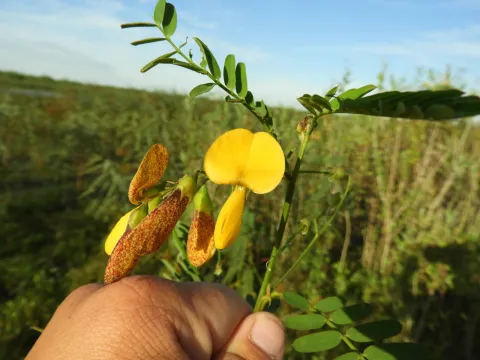
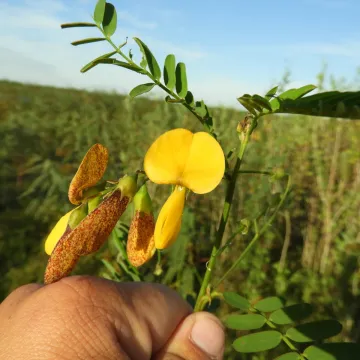
Botanically, it is a semi-woody shrub that features pinnate leaves and distinctive rough patches on its stems, which gives it the specific epithet exasperata. The flowers are typically yellow and bloom in loose clusters, eventually producing slender, elongated pods containing multiple seeds that are vital for propagation.
Regarding cultivation, this crop prefers warm climates and exhibits significant tolerance for waterlogged soil conditions. It is well-suited for heavy clays that drain poorly. Agronomic management involves site preparation and timely seeding, ensuring the plants receive sufficient sunlight to maximize their rapid growth potential.
The agricultural utility of Sesbania exasperata includes:
- Nitrogen fixation, which significantly improves soil fertility for subsequent crops.
- Production of green manure to build soil organic matter content.
- Usage as high-protein forage for livestock in tropical farming systems.
- Erosion control in riparian zones and low-lying agricultural areas.
Common pests include leaf-feeding insects, such as caterpillars and aphids, which can damage young seedlings. Disease management focuses on preventing root rot caused by stagnant water when temperatures drop. Effective crop management requires periodic scouting and appropriate spacing to ensure adequate airflow within the plant canopy.
Photo gallery