Sesbania vesicaria
Sesbania vesicaria
Description
Sesbania vesicaria, commonly known as bladderpod sesbania, belongs to the Fabaceae family. It is an annual herbaceous plant noted for its rapid growth rate and its ability to thrive in specific environmental conditions that favour legume development.
The plant originates from the southeastern United States. It is typically found in moist soils, near riverbanks and in areas that experience warm seasonal climates. Its distribution is largely dependent on the availability of moisture during the growing season and freedom from extreme frost.
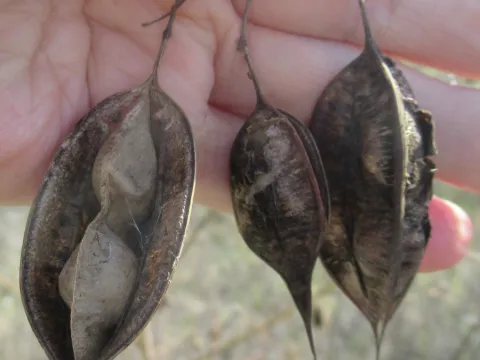
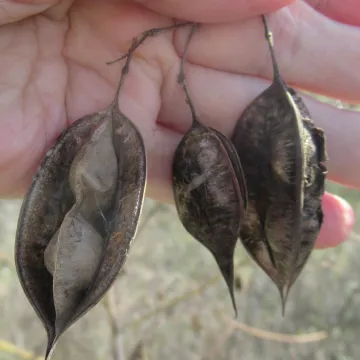
Botanically, the plant features pinnate leaves and distinctive racemes of yellow flowers. The pods are visually characteristic, containing several seeds. The plant is well-adapted to symbiotic relationships with nitrogen-fixing bacteria, which resides in root nodules and enhances soil fertility.
Agricultural requirements for Sesbania vesicaria include well-drained soil with a consistent moisture supply. It is intolerant to cold temperatures, necessitating a late-spring planting schedule. Proper field preparation helps in establishing a uniform crop that can effectively compete with weeds.
The primary agricultural use is as a green manure crop intended to increase nitrogen levels in agricultural soils. While it has soil-remediation benefits, the plant contains toxic alkaloids, making it unsuitable for forage without professional evaluation. Disease and pest control focus on monitoring foliage-feeding insects.
- Effective nitrogen fixation capabilities.
- Rapid biomass accumulation for soil enrichment.
- Sensitivity to low temperatures and frost.
- Requires caution regarding toxicity if used in animal husbandry.
Photo gallery