Seseli tortuosum
Seseli tortuosum
Description
Seseli tortuosum is a perennial herb belonging to the Apiaceae (Umbelliferae) family. It is recognized in agronomy as a resilient aromatic plant species that thrives in challenging environments where typical agricultural crops might struggle due to drought or poor soil quality.
The native range of this plant extends across the Mediterranean region and parts of Southern Europe. Its evolutionary history has equipped it with deep root systems capable of extracting moisture from rocky and calcareous substrates, making it an ideal candidate for cultivation in arid climates.
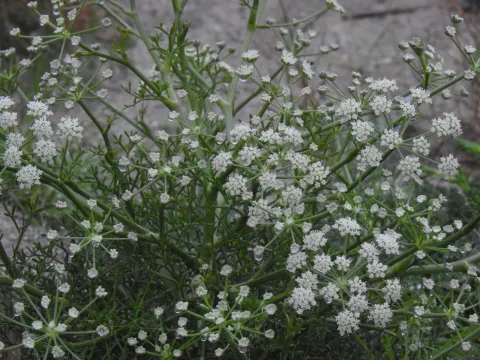
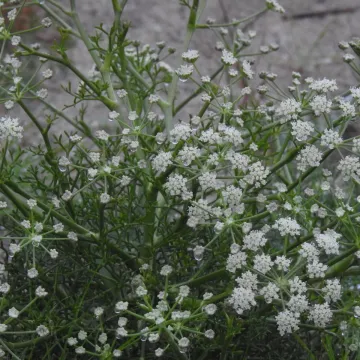
Botanically, it is characterized by its twisted stems, which provide structural integrity in windy conditions. The foliage is finely divided, reducing transpiration surface area. It produces complex umbelliferous inflorescences that are highly attractive to pollinators, contributing to the biodiversity of the surrounding agricultural landscape.
Agricultural requirements for Seseli tortuosum prioritize well-drained, porous soils. It is highly intolerant of waterlogging, which often leads to root fungal infections. Growers should avoid heavy clay soils or implement deep drainage systems. Minimal fertilization is required, as the plant is adapted to nutrient-poor environments.
Host plant utilization is primarily directed towards the extraction of essential oils and its potential role in pharmacological research. Furthermore, its drought tolerance makes it a strategic asset for sustainable agricultural development in regions experiencing increasing desertification and water scarcity.
- Extreme drought resistance
- Low soil fertility requirement
- Excellent pollinator attraction
- Requires well-drained substrate
Photo gallery