Setaria tenax
Setaria tenax
Description
Setaria tenax is a perennial grass species belonging to the Poaceae family. It is a robust, hardy plant that has gained attention in agricultural research for its potential as a forage source and a tool for land rehabilitation in arid and semi-arid regions.
The origin of this species is traced back to the tropical and subtropical regions of South America. Its natural range encompasses areas with highly seasonal rainfall, which has favored the development of physiological traits that allow the plant to withstand prolonged dry spells. Currently, it is cultivated in experimental plots and specific agricultural zones that prioritize drought-resistant forage.
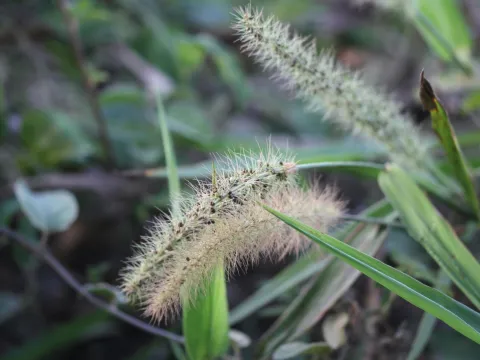
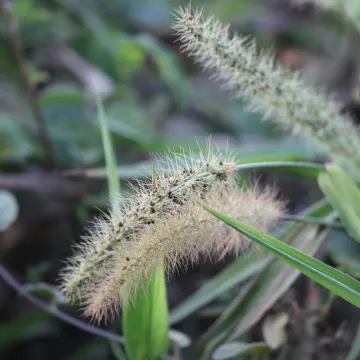
Botanically, the plant is characterized by erect, stiff stems and linear, scabrous leaves. It typically forms dense clumps, which contribute to its resilience. The root system is deep and expansive, allowing the plant to reach subterranean water sources that are inaccessible to shallower-rooted crop species.
Regarding climate and soil, the plant prefers well-drained soils, including sandy or loamy textures, and thrives in sunny environments. Its agronomy requires minimal intervention compared to high-input crops; however, weed management during the seedling stage is critical. Fertilizer application is recommended to boost biomass production, provided that soil moisture remains sufficient for nutrient uptake.
The primary agricultural use of Setaria tenax involves grazing and hay production for livestock. Due to its extensive root structure, it is also highly valued for erosion control on slopes and degraded lands. Common threats include rust diseases and smut, as well as pests like wireworms and stem-boring insects, which can impede growth if infestations are not managed.
Photo gallery