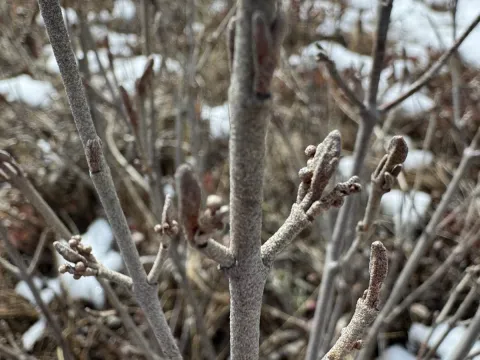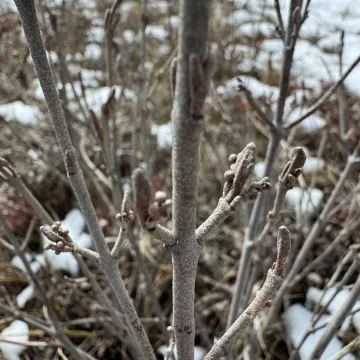
Shepherdia canadensis
Shepherdia canadensis
Description
Shepherdia canadensis, commonly known as the russet buffaloberry, is a deciduous shrub belonging to the Elaeagnaceae family. It is a hardy, nitrogen-fixing plant that is highly valued for its ability to thrive in challenging environments where many other shrubs would struggle to survive.
Native to North America, its range extends across Canada and the northern United States. The shrub is naturally adapted to cold climates and varied soil types, including gravelly or sandy terrain. Its ecological role as a pioneer species makes it highly resilient and capable of restoring soil fertility in disturbed landscapes.
Botanically, it features opposite, oval leaves with a distinctive silvery underside covered in small scales. The shrub produces small, edible, red to yellowish berries that are rich in antioxidants. Being a dioecious species, it produces male and female flowers on separate plants, which is a critical factor for commercial fruit production.
Agricultural requirements focus on providing a well-draining site with full sun exposure. It is highly drought-tolerant once established and does not require frequent fertilization due to its nitrogen-fixing capabilities. Growers should ensure a proper ratio of male to female plants during the planting phase to guarantee successful pollination and fruit set.
The culinary applications of buffaloberries are diverse, as they are used in jams, jellies, and traditional pemmican recipes. Aside from its food value, the plant is often utilized for erosion control and windbreaks. The shrub is generally resistant to most common plant diseases, provided it is not subjected to waterlogged soil conditions.
Photo gallery