Shepherd's purse
Capsella bursa-pastoris (L.) Medik.
Description
Shepherd's purse (Latin: Capsella bursa-pastoris) is a common annual or biennial herbaceous plant belonging to the Brassicaceae (mustard) family. While frequently considered a troublesome weed in agricultural settings due to its prolific growth, it is also highly valued in traditional medicine for its significant pharmacological properties.
The plant originates from Europe and parts of Asia but has achieved a global distribution, making it one of the most widely naturalized plants in the world. It thrives in a variety of environments, ranging from disturbed agricultural fields and waste grounds to gardens and roadsides, showcasing an impressive ability to colonize diverse soil types.
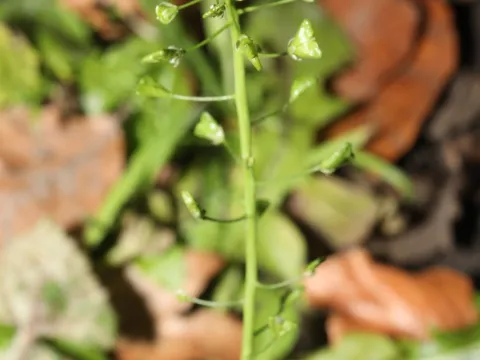
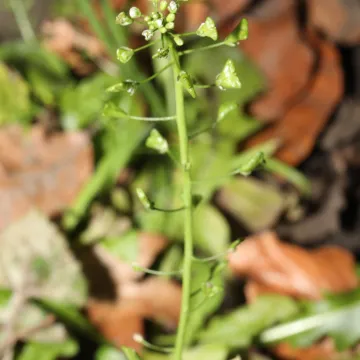
Botanically, Shepherd's purse is identified by its basal rosette of deeply lobed leaves and a slender stem. The most distinct feature is its heart-shaped or triangular seed pods, which resemble the small pouches historically carried by shepherds. The plant is incredibly resilient, with the ability to bloom and set seeds continuously throughout the growing season.
Regarding cultivation and management, the plant requires no special care and is highly tolerant of varying soil pH and fertility levels. Its aggressive growth and early maturation often necessitate vigilant weed control in crop fields, primarily through mechanical hoeing or the use of pre-emergent herbicides in specific agricultural systems.
Beyond its reputation as a weed, Shepherd's purse is utilized in herbal medicine for its haemostatic properties, often used to treat minor bleeding. In some cultures, the young leaves are consumed as a nutritious green vegetable, similar to other members of the Brassicaceae family, providing a source of vitamin K and various phytonutrients.
- Rapid growth cycle with multiple generations per year.
- High seed production and environmental hardiness.
- Rich in flavonoids and essential vitamins.
- Adaptable to diverse climate zones.
Photo gallery