Sideritis candicans
Sideritis candicans
Description
Sideritis candicans, commonly known as a type of ironwort, is a perennial subshrub belonging to the Lamiaceae family. This species is native to the island of Madeira, where it grows in unique volcanic conditions. It is highly valued for its silvery foliage and is part of a genus historically used in traditional herbal medicine.
The plant originates from the high-altitude rocky slopes of its native archipelago. Its natural habitat is defined by exposure to strong winds and direct sunlight. In terms of distribution, Sideritis candicans is considered an endemic treasure, requiring specific environmental conditions that mimic its wild Mediterranean-influenced environment to thrive in cultivation.
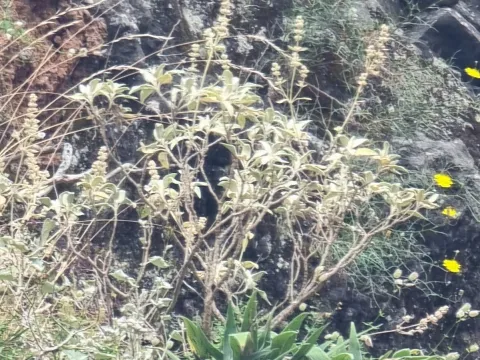
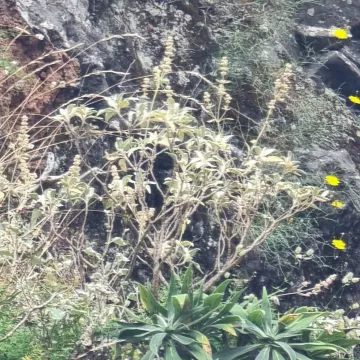
Botanically, the plant is characterized by its distinct greyish, tomentose leaves that help reduce water loss through transpiration. The stems are branched and woody at the base. Its inflorescences consist of clustered yellow flowers that bloom atop terminal spikes. The entire plant has a dense layer of fine hairs, which gives it a shimmering appearance in bright sunlight.
Agricultural requirements focus on xerophytic management. The plant demands well-draining, gritty, or rocky soils with low fertility. Over-fertilization should be avoided, as it can lead to weak, elongated growth. Regarding climate, it is sensitive to heavy frost and prolonged high humidity, making it an ideal candidate for greenhouse cultivation in temperate zones or outdoor planting in USDA zones 9 and above.
Horticultural and medicinal utilization is the primary focus of Sideritis candicans. Extracts from the foliage are processed for their antioxidant and anti-inflammatory properties, often used in herbal teas. In garden settings, it is valued for its drought tolerance and low-maintenance requirements. Key health issues for this crop include fungal infections in the roots if waterlogging occurs, and common greenhouse pests like aphids or spider mites.
Photo gallery