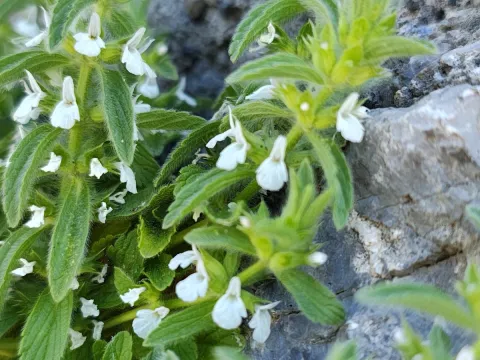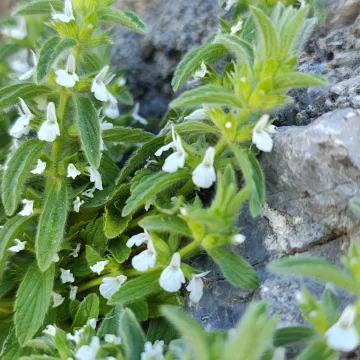
Roman ironwort
Sideritis romana
Description
Roman ironwort (lat. Sideritis romana) is an annual herbaceous plant belonging to the Lamiaceae family. Unlike many of its perennial cousins in the genus, this specific species completes its vegetative cycle within a single growing season, focusing energy on rapid seed production.
The plant originates from the Mediterranean basin and is widely distributed across Southern Europe and parts of North Africa. It is natively adapted to harsh, dry conditions, frequently thriving on limestone outcrops, rocky slopes, and open fields where competition from taller vegetation is minimal.
Botanically, Sideritis romana is characterized by its distinct, often downy stems and small, beak-shaped floral bracts. The leaves are typically lanceolate and possess a greyish, pubescent texture, an evolutionary adaptation designed to reduce water loss in high-temperature environments.
Regarding agrotechnical requirements, this culture is undemanding but specific. It thrives in well-drained, sandy, or rocky soils with a neutral to slightly alkaline reaction. High levels of solar radiation are essential for proper development, and the plant is highly intolerant of waterlogged soil conditions.
The primary economic use of Roman ironwort lies in the pharmacological and tea industries. It is highly valued for its concentration of antioxidants, flavonoids, and essential oils. The harvested aerial parts are commonly brewed as a tonic tea, which is traditionally used to alleviate respiratory issues and boost the immune system.
- Preferred climate: Mediterranean (dry summers).
- Watering: Sparse, restricted to growth phases.
- Soil type: Rocky or calcareous, well-draining.
- Harvest period: During full flowering.
The species is notably resilient against common agricultural pests, which is attributed to its high content of volatile oils and bitter compounds. Diseases are usually limited to fungal pathogens resulting from excessive humidity or poor soil drainage, making preventative site selection and spacing vital for healthy production.
Photo gallery