Sigesbeckia agrestis
Sigesbeckia agrestis
Description
Sigesbeckia agrestis is an annual herbaceous plant belonging to the Asteraceae family. While frequently categorized as an opportunistic species in agricultural environments, it has gained recognition for its significant concentration of secondary metabolites, making it a subject of interest in pharmaceutical research and traditional botanical studies.
The plant originates from tropical and subtropical regions of Asia. Its native range spans across areas with high humidity, including parts of China and the Indian subcontinent. It typically thrives in disturbed landscapes, such as fields, forest margins, and riverbanks, where it can capitalize on nutrient-rich soils and consistent moisture availability throughout the growing season.
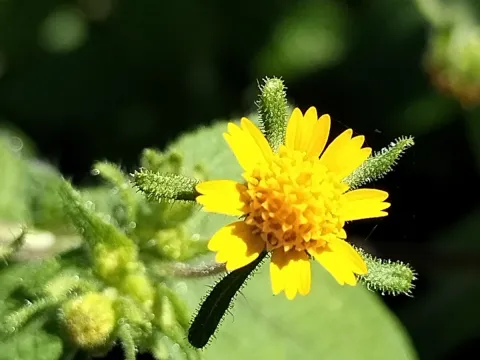
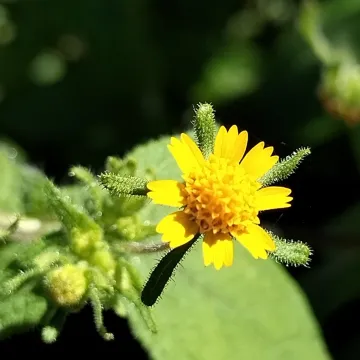
Botanically, the species is defined by its erect, branching stem that can reach heights of nearly one meter. The leaves are typically opposite, triangular-ovate in shape, and possess serrated margins. Small, yellow flower heads appear in loose, terminal panicles. A unique feature of the plant is its sticky bracts, which aid in seed dispersal by adhering to passing animals, a trait that also makes harvesting challenging.
Cultivation requires a balanced approach to soil management and moisture. Sigesbeckia agrestis prefers loamy, well-draining soils rich in organic matter. While it is quite hardy, it shows optimal biomass production when cultivated in areas that receive regular rainfall or controlled irrigation. In a farm setting, it is essential to manage weed competition during the early stages of growth to ensure crop uniformity.
Economically, the crop is valued primarily for its medicinal applications. Extracts from the foliage are utilized for their anti-inflammatory, analgesic, and antimicrobial properties. Additionally, there is ongoing interest in incorporating this plant into sustainable agriculture practices as a source of botanical pesticides or as an ingredient in organic cosmetic products, owing to its complex chemical profile.
- Adaptable to a variety of subtropical climates.
- High potential for medicinal extract production.
- Requires consistent soil moisture for optimal yield.
- Characterized by sticky seeds requiring specific harvesting techniques.
Photo gallery