Bladder campion
Silene behen
Description
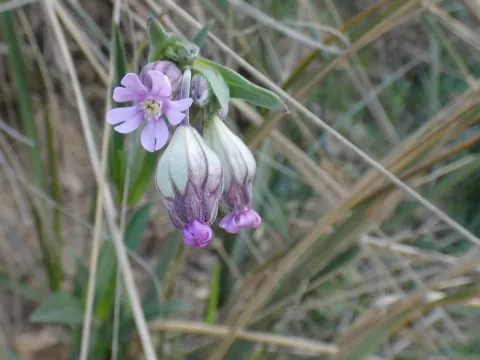
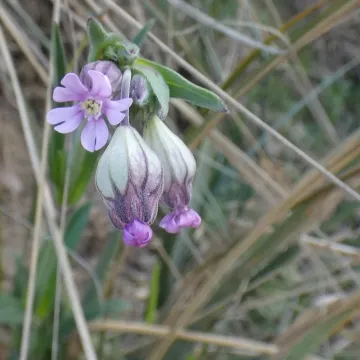
Bladder campion (latin Silene behen) is a herbaceous perennial plant belonging to the Caryophyllaceae family. Known for its distinct inflated calyx, it is a widespread species often found in agricultural settings, meadows, and disturbed lands throughout its native Eurasian range.
The plant has a broad distribution, extending from Southern Europe to the temperate regions of Asia. It thrives in diverse environmental conditions, successfully colonizing both dry, sandy soils and nutrient-rich loamy fields. Its capability to adapt to varied climates makes it a resilient species in many terrestrial ecosystems.
Botanically, Silene behen is characterized by its slender, glabrous stems that branch out from the base, reaching heights of up to 80 centimeters. The leaves are opposite and lanceolate with a bluish-green hue. The flowers are white, appearing in loose cymes, and their most distinctive feature is the bladder-like calyx that protects the developing seed capsule.
From an agronomical perspective, bladder campion requires significant sunlight to thrive. While it can withstand periods of low precipitation due to its deep taproot, it competes with primary crops for moisture and nutrients. Weed control measures typically involve integrated practices, such as competitive crop selection, deep soil cultivation, and the use of approved herbicides in commercial cereal production.
The economic value of this species is primarily ecological rather than agricultural. It serves as an important resource for pollinators, including bees and butterflies. Despite its role in biodiversity, it can be a host for various pathogens, including leaf spot fungi and certain pests like aphids or sawfly larvae, which may occasionally spread to nearby crops if infestation levels are high.
Photo gallery