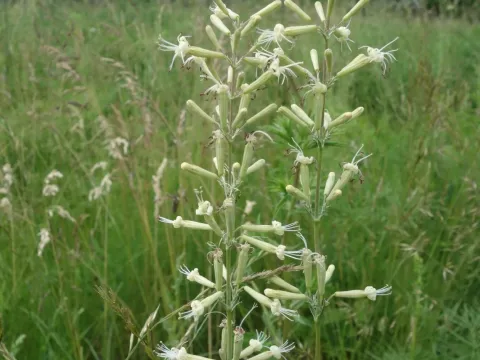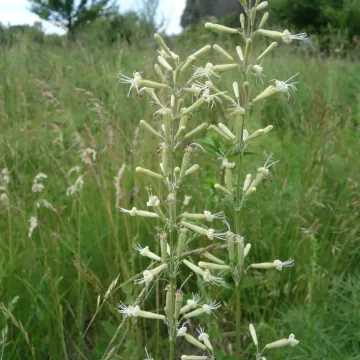
Many-flowered catchfly
Silene multiflora
Description
The many-flowered catchfly (Silene multiflora) is a perennial herbaceous plant belonging to the Caryophyllaceae family. Known for its distinct inflorescences and robust growth habit, it represents a versatile species within its genus, increasingly recognized for its durability in managed landscapes.
Native to the Eurasian continent, this species typically thrives in dry grasslands, steppe-like meadows, and forest fringes. Its distribution across diverse climates indicates a high level of resilience to seasonal temperature fluctuations and varying soil moisture levels characteristic of its ancestral habitat.
Botanically, Silene multiflora is characterized by upright, branching stems that culminate in dense, multi-flowered panicles. The foliage is generally lanceolate and may exhibit pubescence, an evolutionary trait that helps reduce water loss in arid or semi-arid environments. The root system is deep and efficient, supporting the plant’s structure during dry spells.
Cultivation of this species requires careful site selection. The plant is best suited for sunny locations with well-drained, nutrient-poor to moderately fertile soil. It is highly intolerant of waterlogging, as the root crown can easily succumb to decay in heavy, compacted, or constantly wet soils. Minimal supplemental irrigation is usually sufficient once the plants are established.
In practical terms, the many-flowered catchfly is primarily utilized for its aesthetic value in garden design and landscape restoration. Its ability to attract a wide variety of pollinating insects also makes it an excellent choice for conservation plots and areas intended to enhance local biodiversity. It is not typically grown as a commercial crop for human consumption, but rather as an essential component of ornamental and ecological projects.
- Light requirements: full sun exposure is essential for flowering.
- Soil conditions: well-drained, slightly alkaline to neutral pH.
- Pests: aphids and spider mites during drought-stressed periods.
- Disease management: avoiding overhead irrigation helps prevent powdery mildew.
Photo gallery