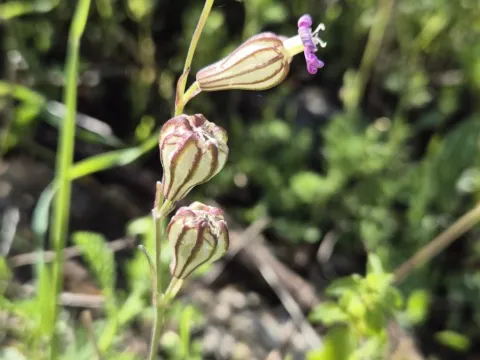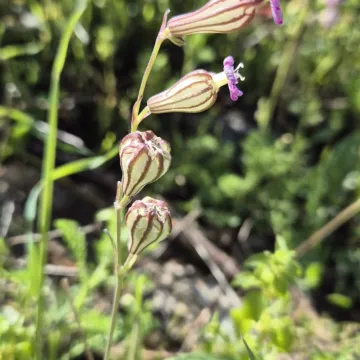
One-sided catchfly
Silene secundiflora
Description
The one-sided catchfly (Silene secundiflora) is a herbaceous plant belonging to the Caryophyllaceae family. In agronomic contexts, it is recognized as a hardy species with significant potential for restoration ecology and low-maintenance landscaping, thanks to its evolutionary adaptation to harsh Mediterranean environments.
This species originates from the Mediterranean basin and surrounding regions, where it has adapted to thin, rocky soils and arid climates. Its native range is characterized by exposure to intense solar radiation and periodic water scarcity, allowing the plant to thrive in conditions where traditional field crops would fail to reach maturity.
Botanically, Silene secundiflora is defined by its characteristic inflorescence where flowers are arranged on one side of the stem, a trait that gives the plant its unique appearance. It features a robust taproot system that provides stability in loose soil profiles, while its foliage exhibits xeromorphic adaptations, such as reduced leaf area and pubescence, to regulate water loss.
From an agronomic perspective, the species requires minimal human intervention. Success in cultivation depends on selecting well-draining soil sites with low nutrient content. It is crucial to avoid heavy fertilization, as excess nutrients can lead to structural weakness of the stems and susceptibility to diseases. Irrigation should be restricted to the establishment phase, after which the plant becomes largely self-sufficient.
- Exceptional drought tolerance.
- Thrives on poor, mineral-rich soils.
- Minimal pest management requirements.
- High ecological value for soil stabilization.
The primary utility of the one-sided catchfly lies in sustainable landscaping and environmental protection, particularly in preventing soil erosion on dry embankments. Common phytosanitary issues include root rots in cases of poor drainage and potential infestations by aphids during prolonged humid periods, which can be mitigated through proper site selection and spatial planning.
Photo gallery