Waldstein's catchfly
Silene waldsteinii
Description
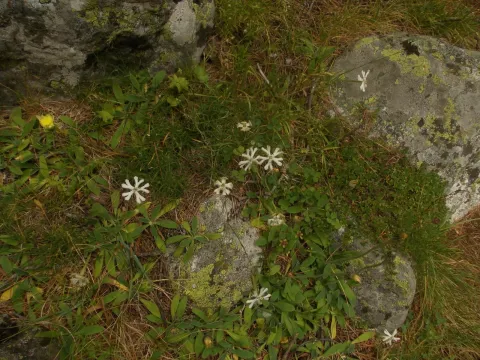
Waldstein's catchfly (Silene waldsteinii) is a herbaceous perennial plant belonging to the Caryophyllaceae family. It is widely recognized in the horticultural community for its low-growing habit and ability to form dense clusters of foliage, making it an excellent candidate for specialized garden environments like rockeries and alpine beds.
Native to the mountain ranges of Southeast Europe, this species has evolved in rocky, nutrient-poor landscapes. This evolutionary history makes it highly resilient and capable of thriving in environments where other ornamental plants might struggle. It is a preferred choice for gardeners looking for low-maintenance perennial cover.
The botanical structure of Silene waldsteinii is characterized by basal rosettes of narrow leaves and delicate flowering stems that emerge in mid-summer. The flowers exhibit the classic Silene morphology with notched petals. The root system is relatively deep for such a small plant, which allows it to access water in rocky, well-draining substrates.
Successful cultivation requires strict adherence to drainage requirements. The plant demands a sunny location with soil that is gritty, neutral to slightly alkaline, and free-draining. Fertilization should be kept to a minimum, as excessive nutrients often lead to lush but weak growth that is susceptible to environmental stress and reduced flowering density.
Waldstein's catchfly is primarily utilized as an ornamental plant for decorative landscaping. Its hardiness makes it a staple for mountain-themed gardens. While it is generally robust, growers should monitor for common issues:
- Root rot triggered by poor water drainage;
- Aphid infestations during dry, warm weather;
- Fungal leaf spots caused by excessive humidity.
Photo gallery