
Description
The Silk-tassel Tree (Garrya elliptica) is an evergreen shrub belonging to the Garryaceae family. It is widely recognized for its high ornamental value, particularly during the dormant season, when it produces long, cascading catkins that add significant visual interest to a garden.
Native to the coastal ranges of the western United States, specifically California and Oregon, this plant thrives in Mediterranean-style climates. Its natural habitat includes scrublands and forested slopes, where it has adapted to withstand dry summers and mild, wet winters, making it a robust choice for appropriate climatic zones.
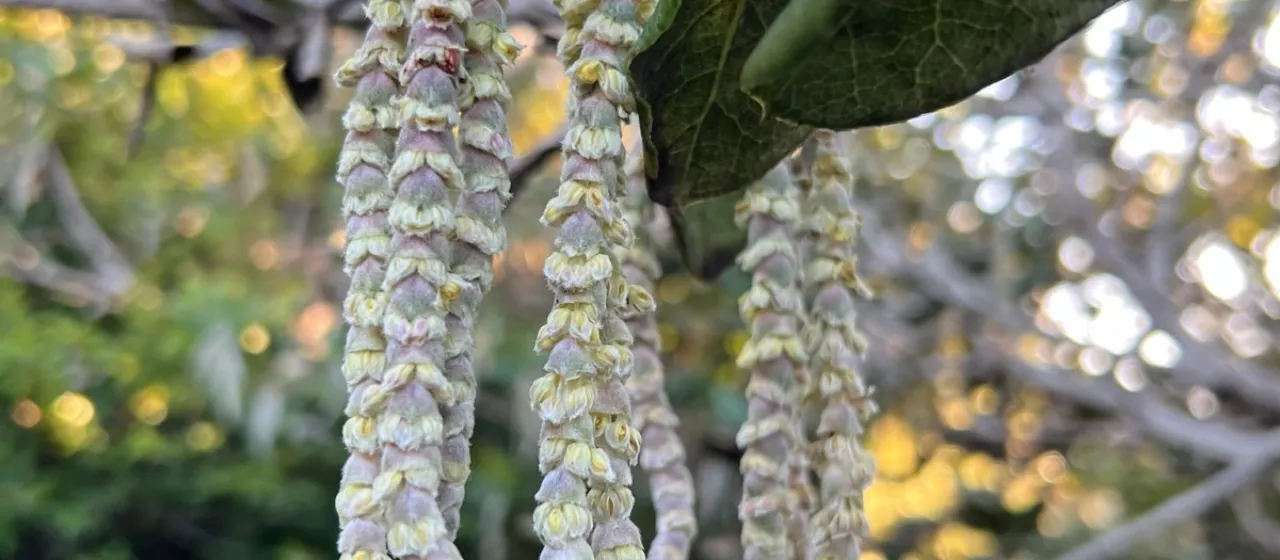
Botanically, the species is characterized by its stiff, leathery leaves with dark green upper surfaces and silvery-gray woolly hairs beneath. The most striking features are the male catkins, which can extend up to 20 cm in length. These blossoms appear in late winter and early spring, providing a distinct early-season display.
Cultivation requirements involve providing the plant with well-drained, fertile soil and a sheltered position in full sun or light shade. It is relatively drought-tolerant once established but benefits from occasional deep watering during extreme heat. Minimal pruning is required, generally performed immediately after flowering to shape the plant and remove dead branches.
In landscape use, it is often employed as a specimen plant, a backdrop for smaller perennials, or a wall-trained shrub. While generally resilient, the plant may suffer from scale insects or aphids. Ensuring good air circulation and avoiding heavy, waterlogged soils is essential to prevent root rot and other fungal diseases, ensuring the long-term health of the shrub.