Siloxerus humifusus
Siloxerus humifusus Labill.
Description
Siloxerus humifusus is a distinctive herbaceous plant belonging to the Asteraceae family. Known for its prostrate growth habit, this species has evolved to thrive in the challenging environmental conditions of its native habitat, demonstrating remarkable adaptation to sandy soils and moisture-limited landscapes.
The plant is native to Western and Southern Australia, where it occupies specialized ecological niches. It is primarily found in open, arid areas where it completes its growth cycle during the cooler, wetter months, taking advantage of seasonal precipitation before the onset of extreme summer heat.
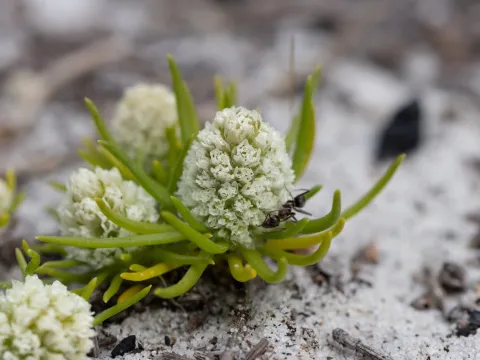
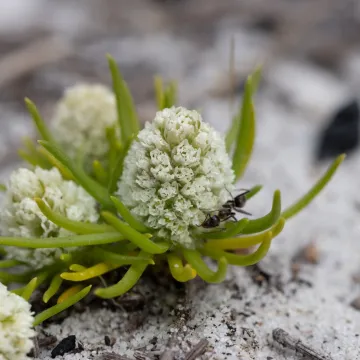
Botanically, the species is characterized by its low-lying, spreading stems and small leaves that help reduce transpiration. The inflorescences are dense clusters of small flowers, which is a classic feature of many Asteraceae members, protecting the reproductive organs from harsh external influences.
In terms of environmental requirements, it prefers well-drained sandy substrates and high exposure to solar radiation. While it is not commercially farmed as a food or industrial crop, its hardiness makes it a subject of interest for environmental studies focusing on the conservation of arid-land flora and restoration of degraded ecosystems.
The agricultural and economic utility of this species remains limited to ecological research. It is generally resistant to standard pests and diseases found in agricultural settings, largely due to its existence in low-competition, specialized wild environments where high-pathogen pressure is infrequent.
Photo gallery