Ivory milk thistle
Silybum eburneum
Description
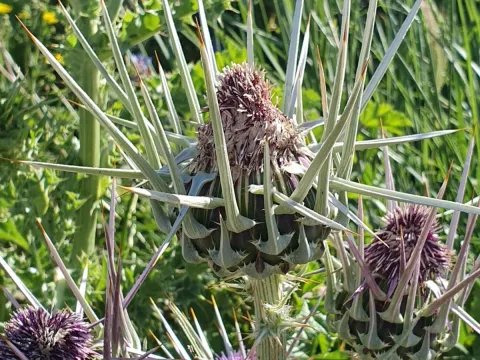
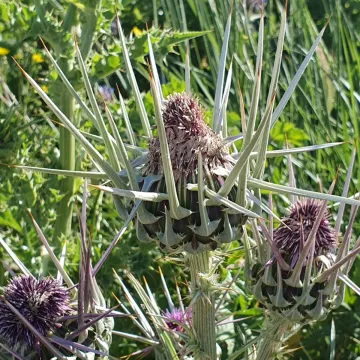
Ivory milk thistle (Latin: Silybum eburneum) is a herbaceous plant belonging to the Asteraceae family. While closely related to the common milk thistle, this species is distinct due to its unique ivory-colored bracts and specific morphological traits that adapt it to Mediterranean climates.
The plant originates from the Mediterranean basin, where it thrives in arid to semi-arid environments. It is naturally found in open fields and rocky slopes, reflecting its high tolerance for poor soil quality and significant temperature fluctuations. Its natural range primarily covers countries in Southern Europe and North Africa.
Botanically, this species is characterized by its robust, spiny foliage featuring a distinct mottled pattern. The inflorescence consists of large, dense capitula protected by sharp-tipped bracts. The plant cycles through vegetative growth followed by a productive flowering stage that results in the development of seeds rich in oils and secondary metabolites.
Regarding cultivation requirements, the ivory milk thistle prefers well-drained, nutrient-poor, or average soils with full sun exposure. The agrotechnology focuses on minimal soil disturbance and moderate moisture levels. It is remarkably drought-tolerant, making it a viable candidate for sustainable agriculture in water-scarce regions.
The economic utility of the plant spans across several industrial sectors:
- Pharmaceutical industry, focusing on liver-protecting compounds.
- Cosmetic industry, utilizing seed oils for skincare formulations.
- Agriculture, as a source for specialized animal feed components.
Pest and disease management is critical to maintaining yield quality. Common issues include aphid infestations during the spring growth phase and fungal pathogens such as powdery mildew in humid, stagnant air conditions. Field management should involve regular scouting and strategic use of integrated pest management (IPM) techniques to ensure healthy crop development.
Photo gallery