Sinapidendron sempervivifolium
Sinapidendron sempervivifolium
Description
Sinapidendron sempervivifolium is a rare perennial species belonging to the Brassicaceae family. It is a strict endemic of the Madeira archipelago, known for its unique evolutionary adaptations to harsh, volcanic cliff environments. Taxonomically, it stands out for its rosette-forming foliage, which clearly distinguishes it from more common agricultural brassicas.
The plant originates from the rugged, rocky slopes of Madeira. Due to its limited natural range, it is primarily studied in botanical gardens and research facilities. Its adaptation to rocky terrain makes it highly specialized, requiring conditions that mimic its native oceanic climate, characterized by mild, frost-free winters and relatively stable temperatures throughout the year.
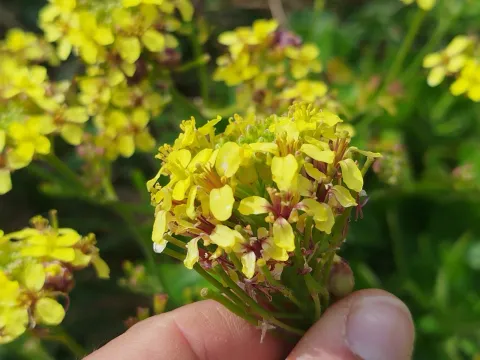
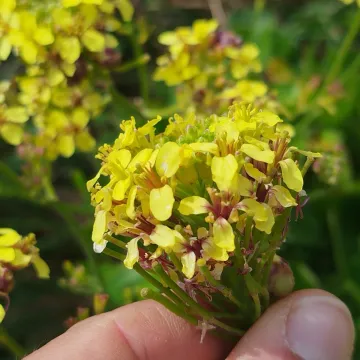
Botanically, the plant features fleshy, succulent-like leaves arranged in a dense rosette, serving as a water storage mechanism. Its inflorescences are typical for the mustard family, producing clusters of yellow flowers. This structural design allows the plant to thrive in nutrient-poor, porous volcanic soils, establishing a deep root system to anchor itself within narrow mountain fissures.
Agronomic requirements are focused on mimicking its natural habitat. Key cultivation factors include:
- Excellent soil drainage using volcanic scoria or gravel mixes.
- Avoidance of over-irrigation to prevent root and collar rot.
- Exposure to bright, indirect sunlight to maintain leaf vigor.
- Protection from extreme humidity which triggers fungal infections.
In terms of хозяйственного (economic) use, the plant is primarily preserved for genetic and scientific purposes. While not a commercial field crop, it serves as a valuable resource for studying stress-resistant plant genes. Typical pests include cruciferous flea beetles and aphids, which are managed through careful integrated pest management techniques, prioritizing mechanical removal or organic deterrents over chemical applications.
Photo gallery