Runcinate hedge mustard
Sisymbrium runcinatum
Description
Runcinate hedge mustard (Sisymbrium runcinatum) is an annual herbaceous plant belonging to the Brassicaceae family. While often identified as a weed in agricultural landscapes, it is a significant subject of study for botanists interested in the adaptability of cruciferous species within disturbed habitats and farming systems.
The species is native to the Mediterranean basin and has successfully migrated across various European regions. It thrives in temperate climates, showing a high preference for sunny, open areas with well-drained soils. Its ability to colonize roadsides, waste grounds, and agricultural fields highlights its biological resilience in diverse soil types.
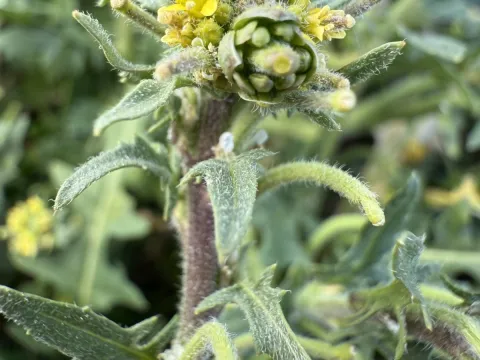
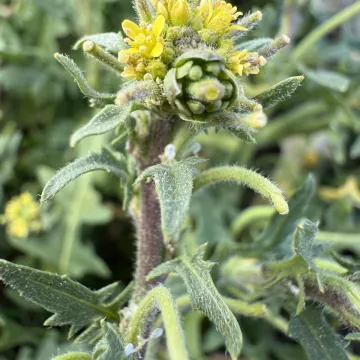
From a botanical standpoint, the plant is distinguished by its erect stem and deeply lobed leaves, which follow a runcinate pattern—pointed toward the base. It produces small, yellow, four-petaled flowers followed by elongated siliques (seed pods). The reproductive strategy relies on the high production of small seeds, allowing the species to persist in the soil seed bank for extended periods.
Regarding soil and climate, the plant is not highly demanding but prefers nitrogen-rich, loose soil conditions. Agricultural management is primarily centered on eradication, involving both mechanical tillage and chemical weed control methods. Due to its close relation to economic crops like canola, it can act as a reservoir for nutrients and a host for undesirable weeds in a rotation program.
Common pests and diseases associated with Sisymbrium runcinatum are similar to those found in other mustard-family plants. Growers should monitor for flea beetles, cabbage aphids, and various fungal infections such as white rust or downy mildew. Managing these effectively is crucial if the plant is encroaching on neighboring high-value commercial crops.
Photo gallery