Water parsnip
Sium suave
Description
Water parsnip (lat. Sium suave) is a perennial herbaceous plant belonging to the Apiaceae family. This species is native to North America and is primarily found in wetland habitats, including marshes, swamps, and riverbanks. As a semi-aquatic plant, it occupies a unique niche in the ecosystem, displaying significant physiological plasticity.
The geographic range of Sium suave spans across much of Canada and the United States. It is highly adapted to moist environments and thrives in nutrient-rich, saturated soils. Its natural distribution is largely dictated by the availability of standing or slow-moving water, making it a reliable indicator species for wetland health.
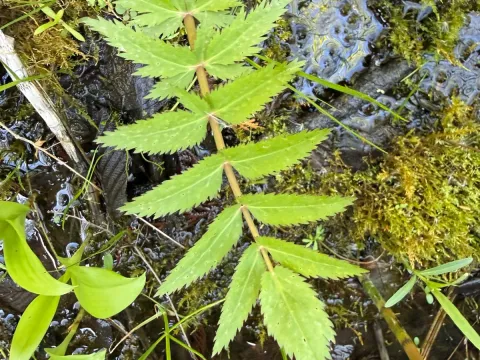
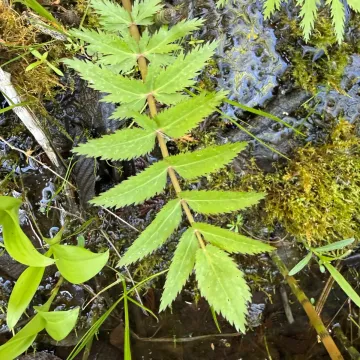
Botanically, the plant is characterized by its hollow, ridged stems and distinctive heterophyllous foliage. The underwater leaves are finely dissected into thread-like segments to reduce resistance in currents, while the aerial leaves are pinnate and lanceolate. The plant produces small, white, five-petaled flowers arranged in compound umbels, typical of the parsley family.
Agricultural success depends on maintaining consistent soil moisture levels. The plant is best suited for riparian buffer zones or constructed wetlands. It requires full to partial sunlight and does not tolerate prolonged drought. Proper soil management involves ensuring an organic-rich substrate that supports vigorous growth of the root system during the active vegetation season.
Uses for the plant include phytoremediation, shoreline stabilization, and restoration of degraded wetland sites. While not a primary agricultural crop, it provides essential habitat and food for wildlife. Management practices should focus on controlling common umbellifer pests, such as aphids and various larvae, and monitoring for fungal infections in excessively stagnant water.
Photo gallery