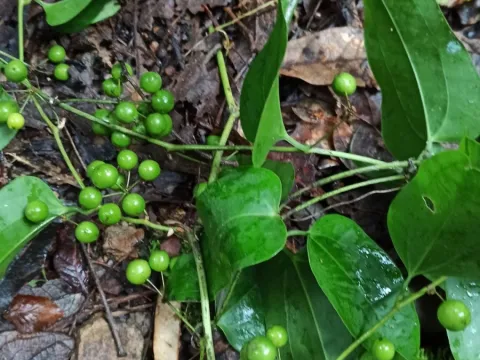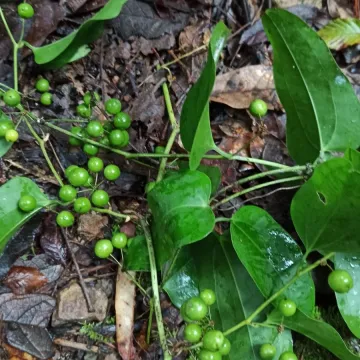
Sarsaparilla
Smilax ornata
Description
Smilax ornata, commonly known as Sarsaparilla, is a perennial evergreen climbing vine belonging to the Smilacaceae family. It is widely recognized for its medicinal properties, specifically the roots, which have been historically utilized in various cultures for their detoxifying and health-promoting effects.
Native to the tropical and subtropical regions of Central and South America, this plant thrives in humid forest environments. It grows as a climbing shrub, utilizing hooked thorns and tendrils to scale tall trees and access the canopy. Its distribution spans from Mexico through Colombia, preferring climates with high annual rainfall and stable temperatures.
Botanically, Smilax ornata is characterized by a thick, tuberous rhizome system that stores essential nutrients and phytochemicals. The stems are woody and armed with spikes, while the leaves are typically heart-shaped or ovate with prominent venation. Its biological structure is designed for efficient water transport and physical support in a dense tropical forest floor.
Cultivation requires loose, organic-rich soil with excellent drainage to prevent root rot. Agronomically, the plant demands high humidity and partial shade, mirroring its natural forest floor habitat. Providing a trellis or vertical support system is essential for the healthy development of the vines, as it promotes better air circulation and prevents mechanical damage to the stems.
The primary economic use of the plant involves the extraction of saponins and flavonoids from the harvested rhizomes. These compounds are used in the pharmaceutical and nutraceutical industries for health supplements and beverages. While pest pressure is generally low in its native habitat, farmers must watch for common tropical leaf spot fungi and sap-sucking insects in intensive greenhouse setups.
- High organic matter content in soil
- Consistent irrigation and high humidity
- Trellising and structural support
- Partial shade conditions
Photo gallery