Bahama nightshade
Solanum bahamense
Description
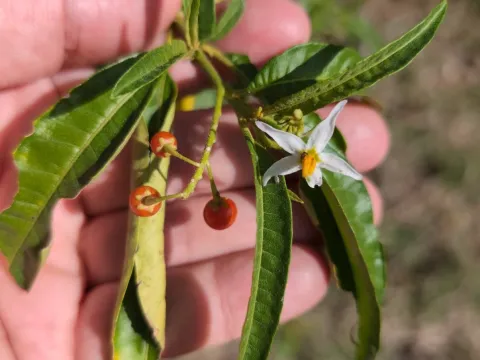
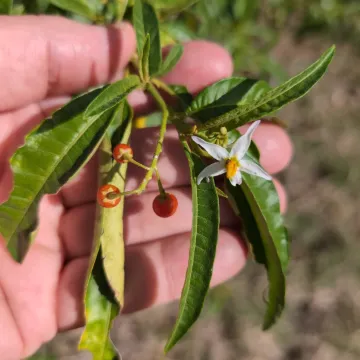
Bahama nightshade (Solanum bahamense) is a perennial evergreen shrub belonging to the Solanaceae family. In its natural habitat, the plant can grow into a dense, woody-based shrub with thorny stems and leaves that are often lanceolate or oblong in shape. It is a striking example of Caribbean flora, well-adapted to coastal conditions and sandy environments.
The native range of this species covers the Bahamas, Florida, and other parts of the Caribbean. It thrives in tropical and subtropical zones where humidity is high and frost is non-existent. In horticultural practices, it is primarily used in warm-climate landscapes or as a specialized ornamental shrub that adds a tropical feel to gardens.
Botanically, the Bahama nightshade is recognized by its vibrant purple to violet flowers featuring a central cone of yellow stamens. Following the flowering period, the plant produces small, spherical berries that transition from green to a brilliant bright orange or red. As a member of the Solanaceae family, the plant produces alkaloids, which serve as a natural defense mechanism against herbivores.
To cultivate Solanum bahamense successfully, growers must ensure well-draining soil, ideally of a sandy or loam texture. The plant is highly light-demanding and should be placed in a location receiving full sun for at least six to eight hours a day. It is relatively drought-tolerant once established, but regular watering during the peak growing season enhances fruit set.
While primarily appreciated for its aesthetic value in landscape architecture, the plant also serves an ecological role by attracting pollinators and providing a food source for native bird populations. Management strategies for this crop include:
- Regular monitoring for aphids, whiteflies, and spider mites in enclosed spaces.
- Application of balanced fertilizers to support vigorous flowering.
- Maintenance pruning to prevent the shrub from becoming too leggy or woody.
Photo gallery