
Chaco potato
Solanum chacoense
Description
Chaco potato (Solanum chacoense) is a wild species of flowering plant belonging to the Solanaceae family. It is widely recognized by agronomists and plant breeders as a critical genetic resource used to improve the resilience and nutritional profile of modern commercial potato varieties.
The native range of this species spans across the South American continent, primarily concentrated in Argentina, Paraguay, Uruguay, and parts of Brazil. It has evolved in diverse ecological niches, allowing it to withstand a variety of environmental stressors, including drought and fluctuating temperature levels.
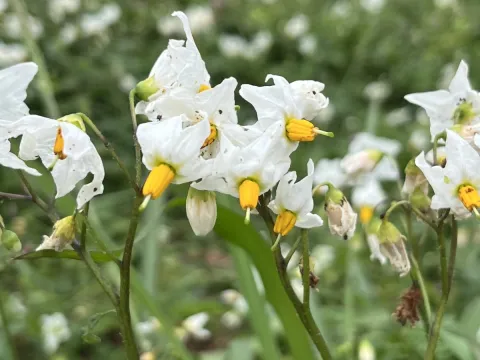
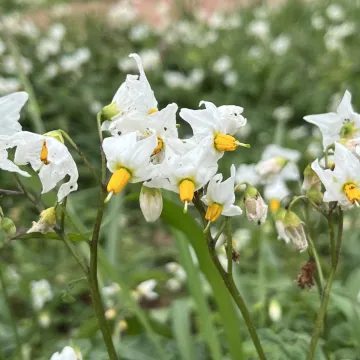
Botanically, Solanum chacoense is a herbaceous perennial that produces stolons and small, bitter tubers. Its morphology includes pinnate leaves and star-shaped white flowers. The plant exhibits high variability in growth habit, which reflects its wide geographical distribution across its natural habitat.
Regarding cultivation requirements, the species thrives in well-drained, fertile soils with a preference for sunny locations. Proper management involves minimizing soil compaction and ensuring adequate moisture without waterlogging, as the species is sensitive to root zone pathogens caused by excessive dampness.
- Strong resistance to the Colorado potato beetle.
- Genetic potential for late blight resistance.
- High tolerance to various viral infections.
- High accumulation of specific biochemical compounds for pest protection.
The primary economic and agricultural use of Solanum chacoense is as a donor for beneficial traits in breeding programs. By integrating its robust disease resistance genes into standard potato lines, scientists work towards creating more sustainable agriculture systems that require significantly fewer synthetic pesticides for healthy growth.
Photo gallery