Tomato bush
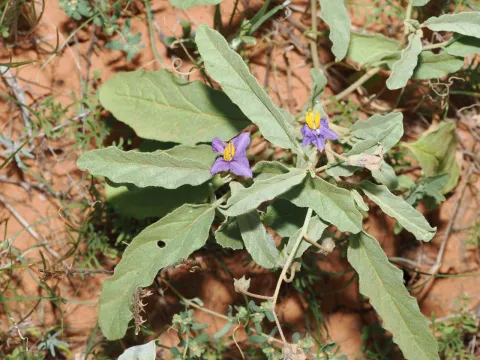
Solanum esuriale
Description
The Tomato bush (Solanum esuriale) is a perennial plant species belonging to the Solanaceae family. Known primarily as a desert-adapted plant, it is a significant member of the genus Solanum, particularly in its native habitat of arid and semi-arid regions across Australia.
The origin of Solanum esuriale is deeply rooted in the Australian Outback, where it thrives in harsh, high-temperature environments. Its natural distribution spans vast desert plains, demonstrating exceptional evolutionary adaptation to low-moisture cycles and extreme soil conditions.
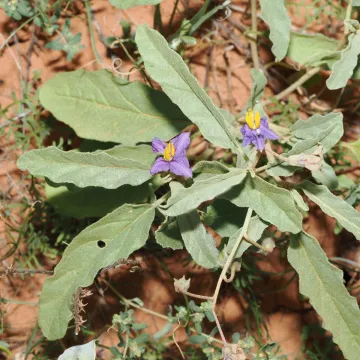
Botanically, the plant is characterized by a sprawling, low-growing shrub habit, typically reaching heights under half a meter. It features distinctively narrow or oval leaves, often covered with a layer of fine hairs that minimize transpiration. The flowers are characteristic of the nightshade family, typically blooming in shades of light violet or white, eventually producing small, yellowish-green fruits.
Climate and soil requirements for this crop are specific: it demands full sunlight and thrives in well-drained, porous soils. Unlike traditional agricultural crops, it does not tolerate waterlogging. Agrotechnical management requires precise irrigation schedules to avoid root rot, making it highly suitable for xeriscaping or research in drought-tolerant agriculture.
Economically, Solanum esuriale is valued as a wild relative of commercial Solanaceae. Researchers focus on its genetic profile to introduce resistance to common pests and diseases like late blight or spider mites into mainstream vegetable lines. While not a large-scale commercial crop, it holds cultural importance and potential as a hardy genetic resource.
- Exceptional drought resistance
- Adaptability to saline environments
- Natural resistance to several Solanaceae-specific pests
- Ability to thrive in low-nutrient substrates
Photo gallery