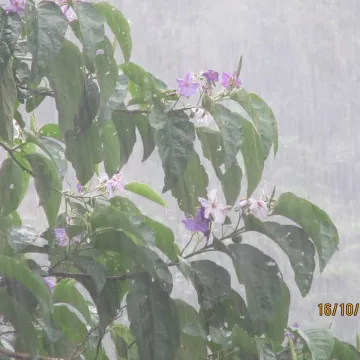

Giant potato tree
Solanum grandiflorum
Description
The Giant potato tree (Solanum grandiflorum) is a perennial woody plant belonging to the diverse Solanaceae family. In its native habitat, it grows as a large shrub or a small tree, often reaching significant heights. It is widely recognized for its spectacular, large flowers that display a unique color transition during their bloom cycle.
Originating from the tropical regions of South America, particularly Brazil, the plant thrives in warm, humid climates. Because it is highly sensitive to frost, its cultivation is largely restricted to tropical regions or managed environments such as heated greenhouses and conservatories in colder zones.
Botanically, the species is characterized by its large, alternate, and slightly pubescent leaves. The flowers are the most notable feature, opening with a rich blue hue and gradually fading to white as they mature. This ornamental display requires specific environmental conditions to reach its full potential.
Agricultural and horticultural requirements for Solanum grandiflorum include well-draining, nutrient-rich, slightly acidic to neutral soils. The plant demands bright, indirect sunlight to flourish. Regular irrigation is essential, but it is critical to ensure that the substrate does not become waterlogged, as this can severely damage the plant's root system.
The plant is primarily valued for its ornamental contribution to tropical landscapes. However, it requires careful pest management, as it is susceptible to common greenhouse pests such as aphids, spider mites, and whiteflies. Proper pruning is also necessary to maintain structural integrity and encourage the development of the next season's flowering wood.
Photo gallery