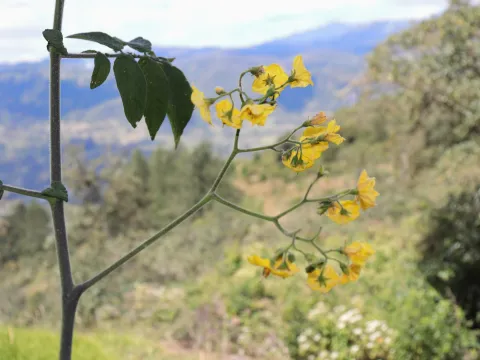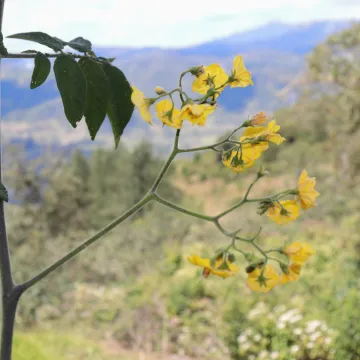

Solanum ochranthum
Solanum ochranthum
Description
Solanum ochranthum is a distinctive plant species within the Solanaceae family, recognized for its adaptability and unique biological characteristics. While not as widespread as its commercially common relatives like the potato or tomato, this plant represents a valuable genetic asset within the genus Solanum.
Originating from the high-altitude regions of the Andes, specifically found in countries like Ecuador and Peru, the plant has evolved in cool, humid environments. Its natural habitat dictates its physiological requirements, as it is well-suited for temperate high-elevation agriculture rather than intense tropical heat or arid lowland conditions.
Botanically, this species is characterized by its woody stems and vigorous growth habit. The leaves are typically broad and may feature fine trichomes. The reproductive structures produce fruit that, while distinct in flavor, shares similar structural traits with other Andean solanaceous crops, often protected by specialized calyx formations.
Agricultural success depends on providing well-drained, nutrient-rich soil with a slightly acidic profile. Farmers should focus on maintaining consistent soil moisture, as the plant does not tolerate prolonged drought. In terms of maintenance, regular pruning and monitoring for soil-borne pathogens are essential to ensure long-term productivity and fruit quality.
The economic and research value of this plant is multifaceted. Beyond its local use as a food source, it is highly regarded for its potential in breeding programs aimed at introducing resistance genes into related crops. Common pests include aphids, whiteflies, and various fungal diseases prevalent in the Solanaceae family, necessitating a structured IPM (Integrated Pest Management) strategy.
- Family: Solanaceae
- Form: Perennial shrub
- Needs: Cool, humid climate, fertile drainage
- Usage: Genetic research, specialty food production
Photo gallery