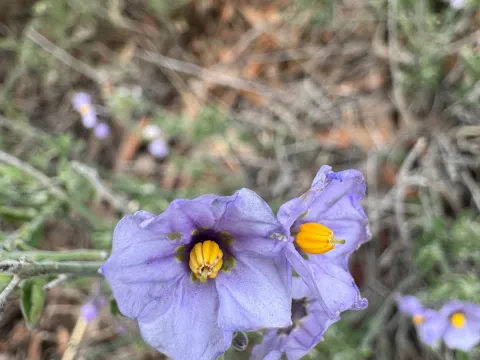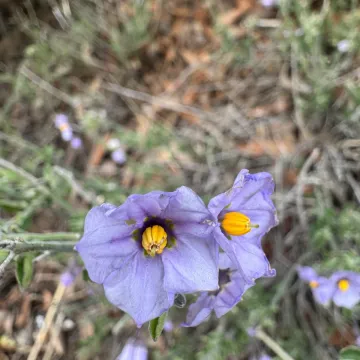
Blue witch nightshade
Solanum umbelliferum
Description
Blue witch nightshade (Latin: Solanum umbelliferum) is a distinctive perennial evergreen shrub belonging to the Solanaceae family. Often utilized in xeriscaping, it is valued for its hardiness and ability to thrive in challenging environments where other ornamental species might struggle.
The plant is native to the western regions of North America, particularly throughout California. Its natural habitat includes coastal scrub, chaparral, and woodland areas. This geographical history has gifted the species with a high level of drought tolerance and a preference for well-drained, nutrient-poor soil types.
Botanically, it is characterized by its hairy, grey-green foliage and striking star-shaped flowers that range from lavender to deep blue or purple. The plant typically reaches a moderate size, forming an open, rounded bush. Like other members of the genus Solanum, it produces small, dark berries that are toxic if ingested.
When considering cultivation, it is essential to provide the plant with full sun exposure and excellent soil drainage. It is not suitable for regions with prolonged humidity or frequent frost, as these conditions significantly increase the risk of fungal infections. Light pruning after the flowering season helps maintain a compact, vigorous growth habit.
While not an edible agricultural crop, its value lies in environmental horticulture and biodiversity support. The plant serves as an excellent nectar source for various native pollinators. Common issues include aphid infestations during the spring growth phase and susceptibility to root rot if the soil remains saturated for extended periods.
Photo gallery