
California goldenrod
Solidago californica
Description
California goldenrod (Solidago californica) is a robust perennial herb belonging to the Asteraceae family. In agricultural and horticultural practices, it is valued for its resilience, adaptability to various soil types, and significant role in supporting local pollinator populations.
The plant originates from the western regions of North America, particularly California. It typically thrives in open, sunny habitats ranging from coastal ranges to mountain slopes, demonstrating an evolutionary preference for well-drained soils and high solar exposure during its growth cycle.
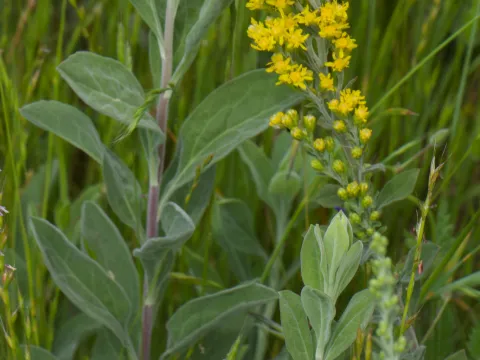
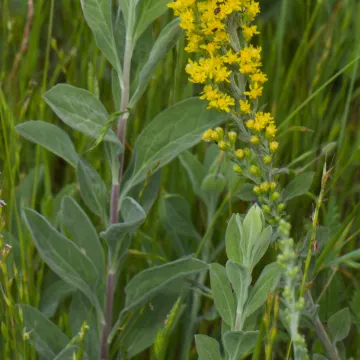
Botanically, the plant is characterized by erect, pubescent stems and lanceolate foliage that provides a sturdy structure. Its most prominent feature is the array of dense, golden-yellow inflorescences that bloom in late summer and autumn, which serve as a critical food source for insects when many other plants have finished flowering.
Agronomically, the crop is relatively low-maintenance, requiring minimal irrigation once established. It thrives in soils with low to moderate fertility and does not require extensive fertilization. Farmers should be aware of its vigorous spreading nature, as it can colonize open spaces quickly via rhizomes and seeds if not properly managed.
Its primary agricultural and commercial utility lies in its use as a late-season honey source for apiculture and as a stabilizer for erosion-prone slopes. While the plant is generally hardy, growers should monitor for occasional occurrences of powdery mildew or rust in high-humidity climates to maintain maximum biomass yield.
- High drought tolerance.
- Valuable late-season nectar source.
- Efficient soil stabilization capabilities.
- Low pest and disease pressure.
Photo gallery