Grass-leaved goldenrod
Solidago graminifolia
Description
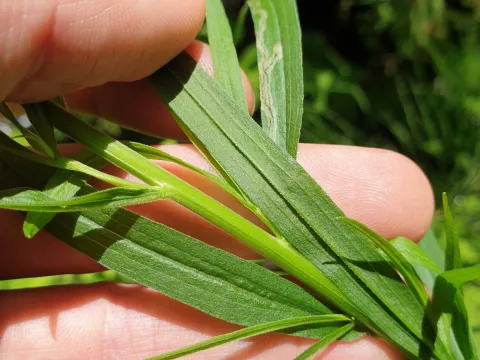
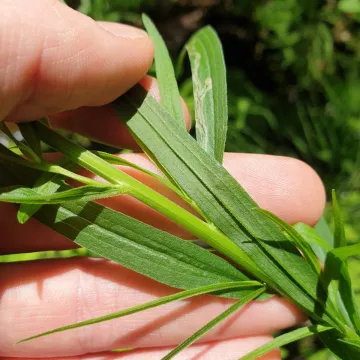
Grass-leaved goldenrod (Solidago graminifolia, often classified as Euthamia graminifolia) is a herbaceous perennial plant belonging to the Asteraceae family. Distinguished by its narrow, lance-shaped leaves that resemble grasses, this plant develops numerous small, yellow flower heads arranged in flat-topped clusters during the late summer and early autumn.
Native to North America, the plant is naturally found in moist meadows, wetlands, and along road verges. It is highly valued for its ecological adaptability, which has allowed it to naturalize across various temperate regions globally. It is recognized for its ability to withstand significant environmental stress, including frost and periodic water fluctuations.
The crop thrives in full sun but maintains reasonable health in partial shade. It prefers moderately fertile, well-drained loamy soils. While it is tolerant of moisture, proper drainage is crucial to prevent root rot in heavier soil types. Once established, the root system is robust, providing the plant with notable drought resistance in the latter part of the season.
Agronomic management involves periodic division of the rootstocks every few years to maintain plant vigor. Minimal fertilization is usually sufficient, though a balanced NPK fertilizer in early spring can enhance biomass production. Because the plant spreads through rhizomes, space management is a key consideration for commercial planting to avoid over-colonization.
The primary utility of Solidago graminifolia includes:
- Apiculture: Providing essential late-season forage for pollinators.
- Ornamental Horticulture: Used in prairie-style gardening and sustainable landscaping.
- Bio-remediation: Helping to prevent soil erosion on disturbed or sloped areas.
- Floral industry: Serving as a filler in both fresh and dried flower arrangements.
Regarding pest and disease control, the species is relatively hardy. However, it can occasionally be affected by aphids or spider mites. Fungal diseases such as powdery mildew are the most common concern, especially in areas with poor air circulation or high humidity. Maintaining healthy spacing and early detection are effective strategies for disease management.
Photo gallery