Texas mountain laurel
Sophora secundiflora
Description
Texas mountain laurel (Sophora secundiflora) is an evergreen shrub or small tree belonging to the Fabaceae family. It is widely recognized for its stunning, grape-scented, violet-blue flower clusters that bloom in early spring, making it a highly prized specimen in horticulture.
The native range of this species spans from the Southwestern United States, specifically Texas and New Mexico, down into northern Mexico. It is specifically adapted to the arid and semi-arid climates of these regions, typically found thriving on rocky limestone outcroppings and dry hillsides.
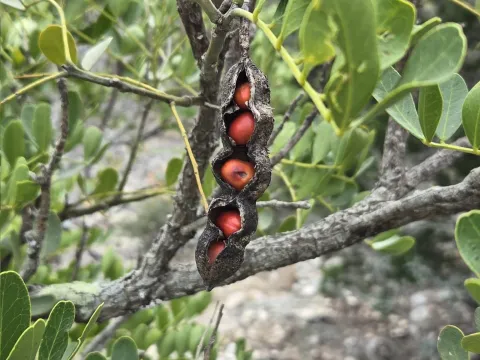
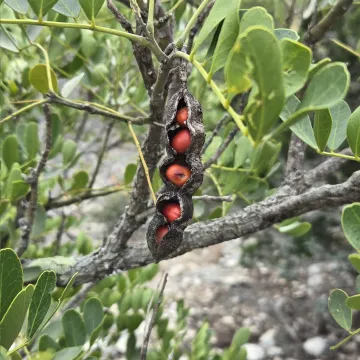
Botanically, the plant is characterized by its glossy, dark green pinnate leaves and persistent woody pods containing bright red, highly toxic seeds. These seeds contain cytisine, a dangerous alkaloid, which acts as a primary defense mechanism against herbivores. The plant grows slowly, developing a dense, evergreen canopy that is highly valued for its aesthetic appeal.
Agricultural requirements for Sophora secundiflora include full sun exposure and extremely well-draining soil. It is notoriously drought-tolerant once established and does not thrive in waterlogged or heavy clay soils. Pruning should be kept to a minimum, primarily to shape the plant or remove damaged branches, as it naturally maintains a tidy form.
The primary хозяйствен use of this plant is in ornamental landscaping and xeriscaping. Due to its resistance to heat and drought, it serves as an excellent erosion control plant for rocky slopes. While it is generally resistant to most pests, occasionally it may be affected by the Genista caterpillar or aphids, though these rarely cause significant damage to mature specimens.
Photo gallery