Korean mountain ash
Sorbus alnifolia
Description
Korean mountain ash (lat. Sorbus alnifolia) is a deciduous tree species belonging to the Rosaceae family. Within the agricultural and horticultural context, this species is recognized for its duality, serving as both an ornamental landscape plant and a source of nutritional berries, valued for its resilience and aesthetic beauty.
Originating from East Asia, including Japan, Korea, China, and the Russian Far East, the plant naturally thrives in mixed woodland environments. Due to its natural habitat, the tree is well-adapted to moderate climates and shows significant tolerance to environmental stressors, making it a viable candidate for cultivation in various temperate zones.
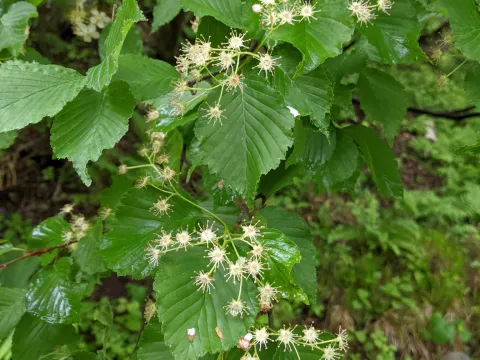
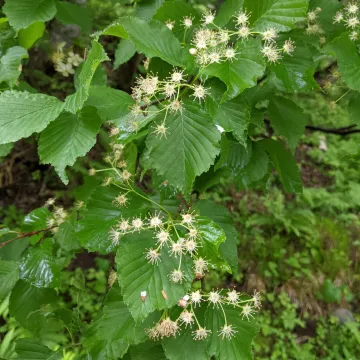
The botanical characteristics of this species include distinct alder-like leaves, which give the plant its scientific name. The tree typically grows to a moderate height of 10–15 meters. It produces attractive white flowers in the spring and edible red fruits in late autumn, which persist on the branches, providing visual interest well into the winter months.
To ensure optimal growth, the Korean mountain ash requires well-drained, fertile soil, ideally with a slightly acidic or neutral pH. The cultivation practice emphasizes site selection with adequate sunlight. Essential care measures include consistent hydration during the first years of establishment, the application of organic mulch, and regular canopy maintenance to ensure good air circulation within the crown.
The economic value of this crop is largely rooted in its use as a hardy shade tree in urban landscaping and for fruit production in small-scale orchards. The berries are high in beneficial compounds and can be processed into preserves or consumed fresh. While relatively resistant, the tree can be susceptible to aphids, spider mites, and fire blight, necessitating vigilant monitoring and preventative biological or chemical pest management.
Photo gallery