Meinich's Rowan
Sorbus meinichii
Description
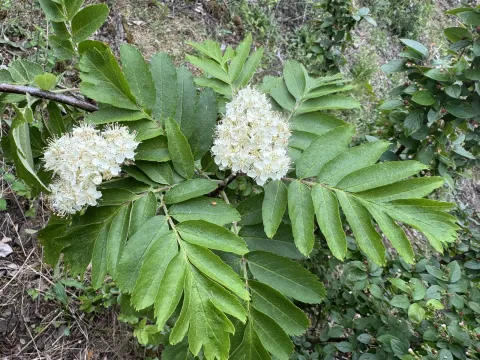
Meinich's Rowan (Sorbus meinichii) is a distinct hybrid tree species belonging to the Rosaceae family. It is a natural hybrid between Sorbus aucuparia and Sorbus intermedia, which results in a tree that displays a harmonious blend of traits from both parent species, particularly in its leaf structure and growth habits.
Native to Northern Europe, particularly regions like Norway and Finland, this tree is exceptionally well-adapted to cool temperate climates. Its evolution in northern latitudes has equipped it with robust mechanisms for surviving harsh winters and short growing seasons, making it a reliable choice for cold-climate gardening.
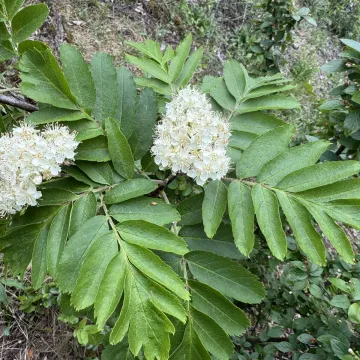
Botanically, the species is identified by its deeply lobed leaves that combine pinnate and simple characteristics. The tree usually develops an upright, well-balanced crown. Its floral display in the late spring is followed by clusters of vibrant, succulent berries that persist into the autumn, providing both visual interest and a food source for local fauna.
In terms of cultivation, Meinich's Rowan thrives in well-drained, fertile soils with a preference for slightly acidic to neutral pH levels. It requires full sun to partial shade to maintain its vigor and optimal berry production. Regular watering during the initial establishment phase is crucial, followed by periodic mulching to retain soil moisture and improve root health.
The practical application of this species is largely ornamental, serving as an excellent specimen for parks, streetscapes, and residential gardens. Its hardiness and aesthetic appeal make it a favorite for landscaping. Furthermore, the berries are edible and can be processed into jellies, syrups, or fermented beverages, adding a nutritional aspect to its landscape value.
- Exceptional frost hardiness suitable for northern zones.
- Unique foliage providing interesting texture throughout the season.
- Resistant to most common pests with proper cultural practices.
- Low maintenance requirements once established in the landscape.
- High ecological value for supporting local bird populations.
Photo gallery