Pohuashan mountain ash
Sorbus pohuashanensis
Description
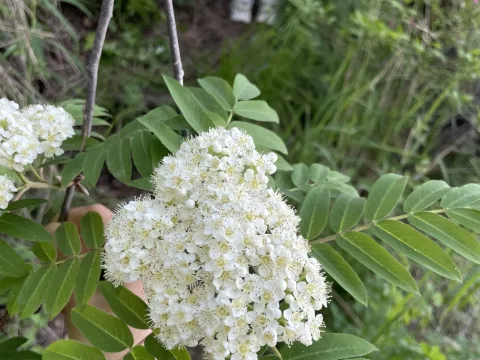
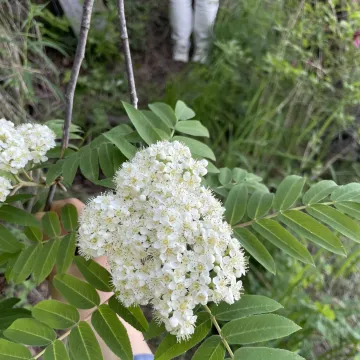
Pohuashan mountain ash (Sorbus pohuashanensis) is a distinctive woody plant belonging to the Rosaceae family. Native to the mountainous regions of Northern China, particularly Mount Pohuashan, this species has gained international recognition for its robustness, structural beauty, and high decorative value in various landscape settings.
From a botanical perspective, it is a medium-sized tree that develops a wide, rounded crown. Its foliage is composed of odd-pinnate leaves that provide excellent shade during summer and turn into brilliant shades of red and orange during the autumn. The tree produces large clusters of fragrant white flowers in late spring, which later mature into vibrant red, ornamental berries that persist well into the winter months.
The cultivation of this species requires a site with full sun exposure to maintain its density and promote fruit production. It thrives in well-drained, fertile soil and demonstrates remarkable cold hardiness, making it suitable for temperate and continental climates. It is relatively adaptable to urban pollution, which allows it to be used effectively in street and city park plantings.
The agronomic management includes consistent irrigation during establishment, annual mulching, and light pruning to maintain a clean form. Fertilization with balanced NPK formulas should be done during the early spring to support active growth. Propagation is primarily carried out through seeds, requiring a period of cold stratification, or by grafting onto compatible rootstocks for specific cultivar stability.
The tree serves both ornamental and edible purposes. While the fruit is valued by local wildlife, it can also be processed for human consumption in various preserves and syrups. To ensure tree health, it is essential to monitor for common pests such as aphids and leaf-miners, as well as fungal diseases like rust and scab, which are generally managed through good sanitation and standard horticultural care practices.
Photo gallery