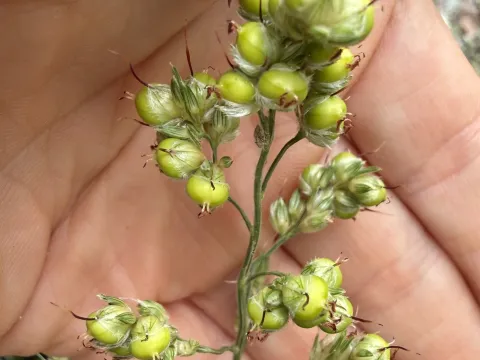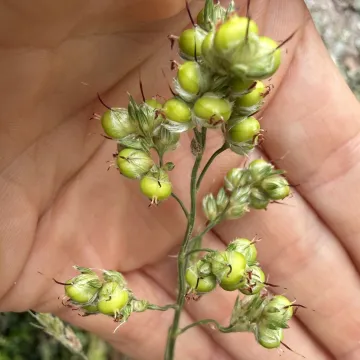
Guinea sorghum
Sorghum guineense
Description
Guinea sorghum (Sorghum guineense) is a vital agricultural crop belonging to the Poaceae family. It is recognized for its ability to thrive in harsh environments, serving as a staple food source and essential fodder in various arid and semi-arid regions where other cereal crops fail to produce consistent yields.
The plant originates from West Africa, where it has been cultivated for centuries. Its natural range encompasses broad areas of the African continent, and it is now grown in various tropical regions globally. Its ability to adapt to diverse ecological niches has made it a fundamental component of subsistence and commercial agriculture in these climates.
Botanically, Sorghum guineense is characterized by a robust root system and a sturdy stalk that supports dense panicles of seeds. Its leaves feature a distinctive waxy cuticle, which serves as a physiological adaptation to minimize water loss through transpiration, allowing the crop to maintain metabolic activity even during periods of intense heat.
In terms of agricultural requirements, Guinea sorghum thrives in hot weather and requires high solar radiation. While it is tolerant of poor, sandy, or nutrient-deficient soils, it performs best when provided with adequate soil structure and moisture at the early stage of development. Effective agronomy includes proper seedbed preparation and strict weed management during the establishment phase.
The хозяйственное usage of this crop is multifaceted:
- Grain processing into flour for local dietary traditions.
- Utilization of green biomass for livestock feed and silage production.
- Employment of dry stalks for roofing, fencing, or biofuel applications.
Common biological threats include various insect pests, such as aphids and stem borers, which can significantly reduce yields. Additionally, fungal pathogens like smut and anthracnose pose risks to crop health. Farmers manage these issues by employing resistant cultivars, practicing effective crop rotation, and applying timely chemical or biological control agents to ensure a stable harvest.
Photo gallery