unbranched bur-reed
Sparganium emersum
Description
Unbranched bur-reed (Sparganium emersum) is a perennial aquatic plant belonging to the Typhaceae family. In an agricultural context, it is recognized as a key species for wetland management and the biological stabilization of riparian zones near agricultural fields.
The plant originates from the temperate regions of the Northern Hemisphere, showing a wide distribution across Europe, Asia, and North America. It thrives in diverse aquatic habitats, ranging from slow-moving streams and ponds to nutrient-rich ditches. Its resilience allows it to persist even in disturbed environments typical of managed agricultural landscapes.
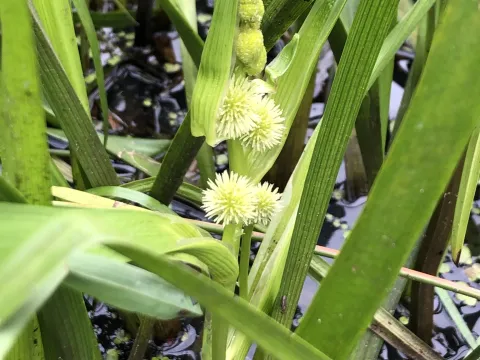
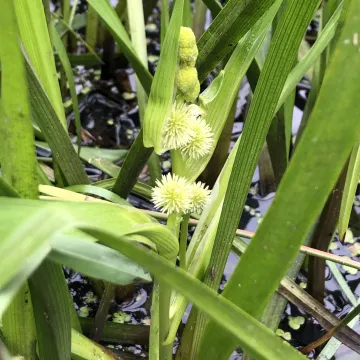
Botanically, it is characterized by its long, strap-like leaves and distinct spherical inflorescences that resemble prickly heads. Its rhizomatous root system is robust, allowing the plant to form dense colonies that bind soil effectively. This structure is highly beneficial for preventing erosion along irrigation channels and farm ponds.
Regarding cultivation and agronomy, the plant requires saturated or waterlogged soils and plenty of sunlight. It is largely indifferent to soil pH but prefers nutrient-rich, silty conditions. Maintenance is minimal but involves controlling the spread to prevent clogging of water management infrastructure. It is generally resistant to pests, though it may occasionally be affected by specific fungal pathogens in stagnant, highly polluted water.
The primary economic and agricultural use of this plant is in phytoremediation and water purification. By absorbing excess nutrients and heavy metals from agricultural runoff, it improves water quality for irrigation purposes. Additionally, it serves as a habitat for beneficial predatory insects and provides a secondary forage source for waterfowl, contributing to the overall ecological balance of the farm ecosystem.
Photo gallery