Pearlwort spurrey
Spergula morisonii
Description
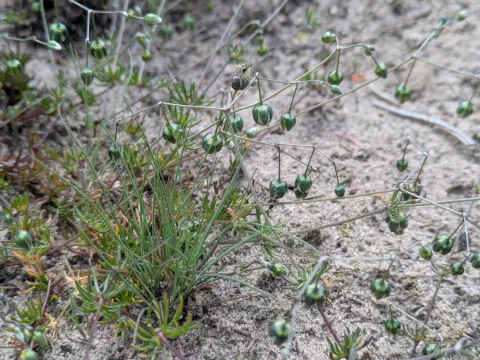
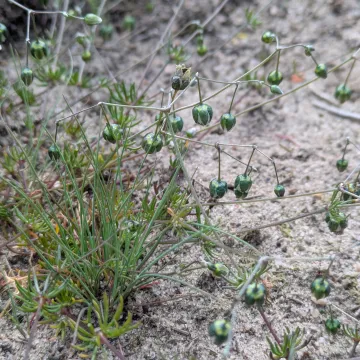
Pearlwort spurrey (Spergula morisonii) is an annual herbaceous plant belonging to the Caryophyllaceae family. In agricultural practice, it is primarily identified as a weed, often colonizing sandy or nutrient-poor soils. While not a cultivated crop, its presence serves as a significant biological indicator for soil conditions and nutrient deficiency.
Originating from the European temperate regions, the plant has established itself across various sandy habitats. It thrives in environments where soil acidity is high and organic matter is low, allowing it to outcompete standard crops that require richer substrates. Its ability to grow rapidly during early spring makes it a notable competitor in fields where winter crops have failed or been thinned.
The botanical structure of Spergula morisonii is characterized by its slender, erect stems and needle-like leaves arranged in whorls. Its flowers are small and white, typical of the Caryophyllaceae family. The root system is relatively shallow, which is an adaptation to rapid moisture uptake in light soils during the early development stages, preceding the arrival of warmer weather.
Regarding agronomic requirements, this plant is best managed through soil structural modification. It does not tolerate heavy, clay-rich soils or high levels of competition from more vigorous, faster-growing species. Agronomists recommend specific strategies to mitigate its impact, including the application of lime to correct pH levels, intensive tillage, and the use of targeted herbicides if the infestation becomes critical for the primary crop yield.
Economically, this species is considered a nuisance rather than a productive crop. There is no major commercial use for the plant, although its presence suggests that land remediation or nutrient adjustment is needed. Typical pests and diseases include common leaf-spotting fungi and generalist insect pests that affect the broader pink family. Consistent crop rotation remains the most effective long-term management tool against its proliferation in agricultural landscapes.
Photo gallery