Germander meadowsweet
Spiraea chamaedryfolia
Description
Germander meadowsweet (Spiraea chamaedryfolia) is a deciduous flowering shrub belonging to the Rosaceae family. It is highly valued in horticulture for its resilience, cold hardiness, and spectacular spring display of white blooms.
The plant originates from the forest regions of Eurasia, stretching from Central Europe to Eastern Asia. Due to its natural habitat in forest edges and mountainous slopes, the shrub has developed a high degree of adaptability to various environmental conditions and soil types.
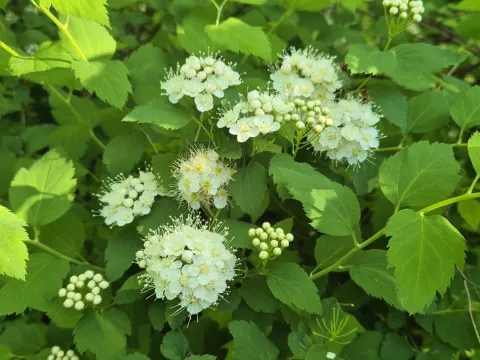
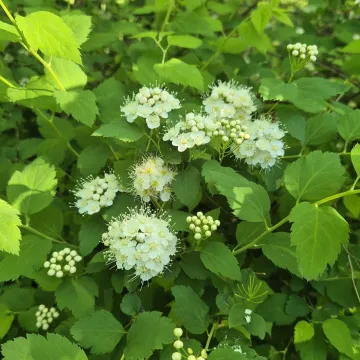
Botanically, it typically reaches a height of 1.5 to 2 meters. The shrub features arching or upright stems with ovate-lanceolate, serrated leaves. The flowers are small, white, and organized into corymbose inflorescences that densely cover the stems, creating an impressive visual impact.
Cultivation requires well-drained, moderately fertile soil and a sunny location to ensure maximum flowering, although the plant is tolerant of partial shade. Agrotechnical care involves periodic pruning of old wood to rejuvenate the shrub and maintaining consistent moisture levels during the first year of establishment.
This shrub is extensively utilized in landscaping for formal and informal hedges, screens, and border plantings. Beyond its ornamental value, it serves as a robust ground cover for erosion control on slopes and acts as a significant early-season nectar source for pollinators.
Common issues affecting the health of the plant include:
- Aphid infestations on tender new foliage.
- Spider mite damage during periods of prolonged drought.
- Powdery mildew and leaf spot pathogens in humid, poorly ventilated areas.
Photo gallery