Spiraea decumbens
Spiraea decumbens
Description
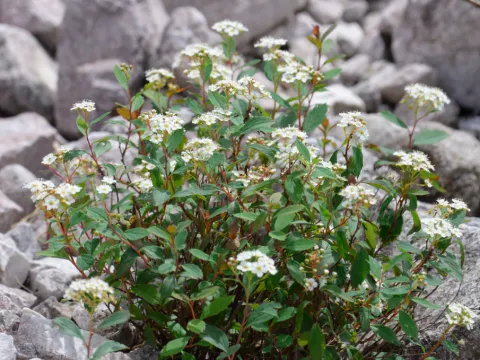
Spiraea decumbens, commonly known as creeping spirea, is a low-growing deciduous shrub belonging to the Rosaceae family. This species is highly valued in horticulture for its compact, trailing growth habit, which makes it an ideal plant for covering ground in rock gardens and small borders.
Originating from the mountainous regions of Southern Europe, specifically the Alps, this species is well-adapted to harsh environmental conditions. Its natural habitat includes rocky slopes and crevices, which contributes to the plant's robust nature and its ability to thrive in poor, well-draining soils.
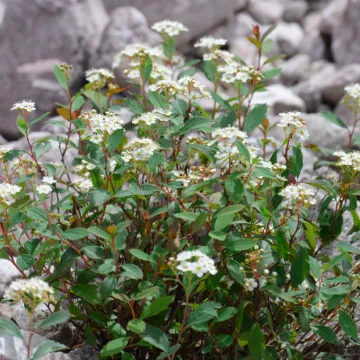
Botanically, Spiraea decumbens is characterized by its prostrate stems that rarely exceed 30 centimeters in height. Its foliage consists of small, serrated, lance-shaped leaves that maintain a vibrant green color. During early summer, the shrub produces abundant, small, white flowers organized in dense corymbs, creating a delicate and airy appearance.
The agrotechnical requirements for this shrub are relatively simple. It thrives in full sun or light shade and requires well-drained, neutral to alkaline soil. While it is quite hardy, maintaining adequate moisture during the initial growth phase is crucial. It does not tolerate waterlogging, so proper drainage is essential in heavier soil types.
The primary use of Spiraea decumbens is in ornamental landscaping. Its growth habit offers several practical applications:
- Serving as a groundcover to prevent soil erosion on banks.
- Providing structure and texture in alpine and rock gardens.
- Creating low, maintenance-free edges along garden paths.
Regarding pest and disease management, the shrub is generally resistant but may occasionally be affected by aphids or spider mites during hot, dry weather. Fungal issues like powdery mildew can occur if air circulation is poor. Keeping the plant properly pruned and ensuring it is not overcrowded will significantly reduce these risks, ensuring long-term health and vigor.
Photo gallery