Stauntonia hexaphylla
Stauntonia hexaphylla
Description
Stauntonia hexaphylla, commonly known as the six-leaf stauntonia or chocolate vine (though often confused with Akebia), is a robust evergreen climbing plant in the family Lardizabalaceae. It is highly valued in horticulture for its glossy foliage, fragrant spring flowers, and unique, edible fruit that resembles small, elongated berries.
Native to the forests of Japan, Korea, and China, this vine has adapted to diverse temperate environments. In its natural range, it thrives in rich, moist soil and uses trees as natural supports to reach the light. When cultivated in gardens, it is frequently used to cover trellises, arbors, and large fences, adding an exotic flair to the landscape.
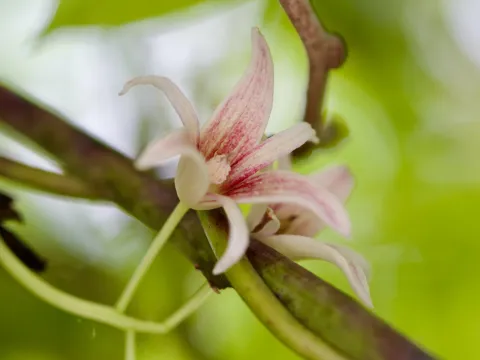
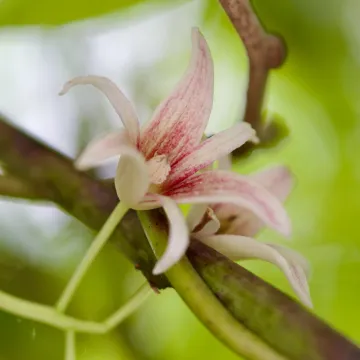
Botanically, the plant is characterized by its compound leaves, which usually consist of six to seven leaflets. The inflorescences produce creamy-white or pale purple flowers that provide a pleasant fragrance. Once fertilized, the plant develops purple-skinned fruit containing a sweet, gelatinous pulp with small, black seeds, making it a unique addition to an edible landscape.
Regarding cultivation, Stauntonia hexaphylla requires well-draining, humus-rich soil and a location that offers protection from harsh winter winds. It is generally hardy, but young plants should be protected during their first few years. Regular irrigation is necessary, especially during the active growing season, to maintain the health of the foliage and ensure fruit production.
Typical plant health issues are rare, as the species is quite resistant to common garden pests. However, overwatering or heavy, waterlogged soil can lead to root pathogens. Maintenance should include yearly pruning to control its vigorous growth, remove dead wood, and encourage better fruit set, ensuring that the plant remains healthy and productive for many years.
Photo gallery