Greater stitchwort
Stellaria holostea
Description
Greater stitchwort (Stellaria holostea) is a perennial herbaceous plant belonging to the Caryophyllaceae family. Unlike its relative, the common chickweed, this species is typically found in woodland habitats and hedge banks, distinguishing itself by its elegant appearance and strictly perennial growth cycle within stable forest ecosystems.
The native distribution of this plant includes the majority of Europe and parts of Western Asia. It typically thrives in deciduous woodlands, hedgerows, and shaded meadows. It is highly valued as an indicator species for ancient woodland, preferring stable, undisturbed soil conditions where organic matter content is consistently high.
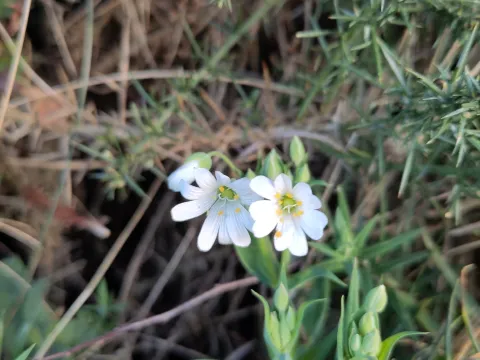
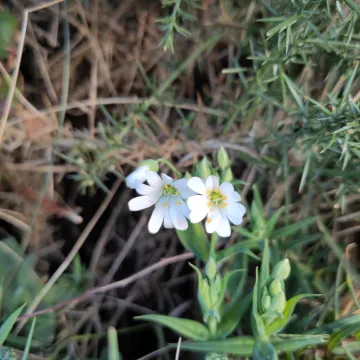
Botanically, the plant is recognized by its brittle, quadrangular stems that reach up to 40 cm in height and narrow, lanceolate leaves. Its most distinctive feature is the large, white, five-petaled flowers, where each petal is deeply bifid. These blooms create vibrant displays during the late spring season, spreading via a creeping rootstock system.
Regarding climate and soil, the greater stitchwort prefers cool, temperate conditions with moderate to high moisture levels. It requires soil with good nutrient status and is sensitive to extreme summer drought. While it is not a cultivated agricultural crop, it is often utilized in ecological landscaping and reforestation projects to stabilize forest floors.
From a biological standpoint, the plant is susceptible to common garden pests such as aphids and various leaf-mining insects during humid periods. It has historically been utilized in ethnobotany for its mild medicinal properties. In a modern context, it serves primarily as a key component of biodiversity in its native habitat, supporting various pollinating insect species.
Photo gallery