Marsh stitchwort
Stellaria palustris
Description
Marsh stitchwort (Latin: Stellaria palustris) is a perennial herbaceous plant belonging to the Caryophyllaceae family. In agricultural science, it is recognized as a specialized species capable of thriving in waterlogged environments, providing ground cover where other crops struggle to establish.
The native distribution area of this plant spans across the temperate regions of Eurasia. It is most commonly found in wetlands, marshy meadows, and along the banks of freshwater bodies. Its evolutionary path has favored habitats with constant moisture availability, allowing it to dominate in saturated soil conditions.
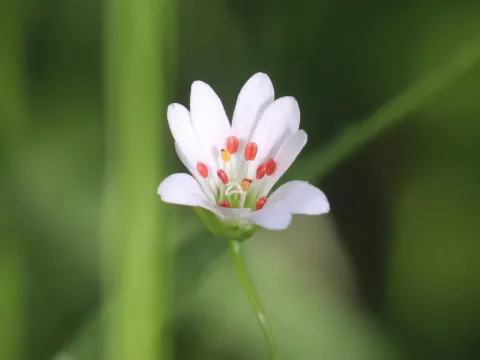
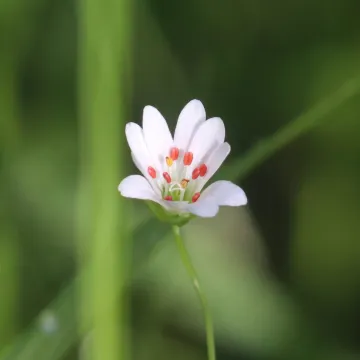
Botanically, the plant is characterized by slender, sprawling stems reaching heights of 40-50 cm, lanceolate leaves, and delicate white star-shaped flowers with deeply cleft petals. Its creeping rhizomes allow for efficient propagation and the formation of dense, carpet-like mats in suitable wetland environments.
Growing requirements for marsh stitchwort focus heavily on soil hydration and structure. The crop prefers fertile, humus-rich, and loamy soils with a high water table. In terms of agronomy, maintaining consistent soil moisture levels is critical; the plant is exceptionally sensitive to drought, which interrupts its vegetative development and biomass accumulation.
From a utilization perspective, it is primarily harvested as part of the natural forage in floodplain meadows, contributing to the diversity of available feed. It also plays a role in phytoremediation and soil stabilization. Agricultural management must monitor for common issues such as fungal pathogens, which are favored by high humidity, and insect pests that target the plant's succulent, moisture-rich stems.
Photo gallery