Maral root
Stemmacantha carthamoides (Willd.) Dittrich
Description
Maral root (Stemmacantha carthamoides) is a perennial herbaceous plant belonging to the Asteraceae family. This species is highly valued in both folk and evidence-based medicine due to its rich content of ecdysteroids, which act as potent adaptogens, helping the human body manage physical and mental stress.
Originating from the mountain regions of Siberia, Altai, and Mongolia, Maral root has adapted to cool, subalpine environments. It is a highly resilient crop, characterized by its ability to thrive in regions with cold winters. When cultivated commercially, it requires specific conditions to ensure a high concentration of active components in its rhizomes.
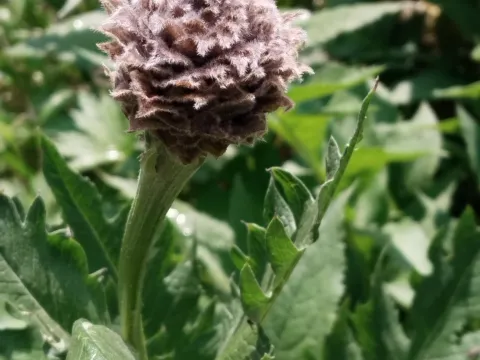
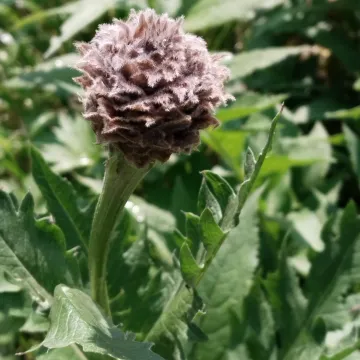
The plant grows as a robust cluster with stems reaching 1 to 1.5 meters in height. Its foliage is deeply pinnatisect, providing a dense vegetative cover. The most distinctive botanical feature is the large, purple, thistle-like flower head that appears on mature plants during the summer months. The root system is deep and woody, serving as the primary commercial component.
From an agrotechnical perspective, Maral root prefers fertile, well-aerated loamy soils with a neutral pH. Proper moisture management is critical; the crop requires consistent hydration during the growing season but suffers significantly if drainage is poor. Seeds require cold stratification before sowing to ensure uniform germination, and weed control during the first year is vital for establishment.
Economically, Maral root is primarily harvested for the pharmaceutical industry. The rhizomes are typically extracted after 3 to 4 years of growth. Apart from medicinal use, it is increasingly explored in the sports nutrition sector as a natural performance enhancer. Sustainable agricultural practices involve crop rotation and integrated pest management to keep the yield free from pathogens and pests.
- Prefers high-altitude or cool temperate climates.
- Optimal harvest time is late autumn or early spring.
- Susceptible to soil-borne pathogens if drainage is inadequate.
- Requires protection from common agricultural pests like wireworms.
Photo gallery