Stemodia verticillata
Stemodia verticillata
Description
Stemodia verticillata, commonly known as whorled stemodia, is a herbaceous perennial plant belonging to the Plantaginaceae family. While not a conventional crop in broad-acre agriculture, it is a highly valued ornamental species used extensively in professional landscaping, indoor horticulture, and as a low-maintenance ground cover in temperate and tropical garden designs.
The plant is native to the tropical regions of Central and South America, as well as parts of the Caribbean. In its natural habitat, it thrives in damp, shaded environments, often colonizing riverbanks, forest clearings, and areas with high humidity. Because of this natural adaptation, its cultivated range is generally restricted to greenhouses or mild outdoor climates where frost is non-existent.
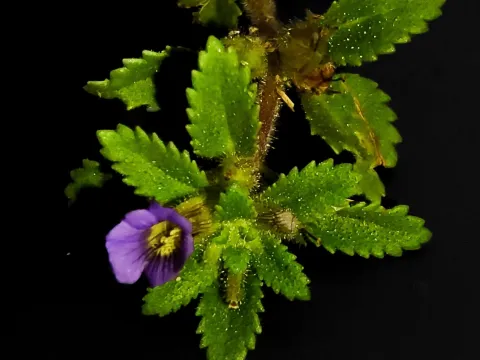
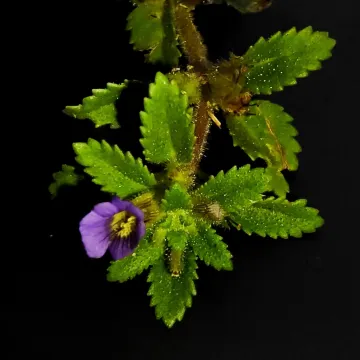
Botanically, Stemodia verticillata is characterized by its prostrate, creeping stems that exhibit excellent rooting capabilities at the nodes upon contact with moist soil. The foliage consists of small, whorled leaves that provide a dense, lush green mat. The plant produces small, solitary, purple-to-lavender flowers that appear along the stems, adding significant ornamental value to its vegetative structure.
Agricultural and horticultural requirements for successful growth include high-nutrient, moisture-retentive, yet well-draining soil. It is a moisture-loving species that demands consistent hydration; however, poor drainage can quickly lead to physiological stress. The plant requires bright, filtered sunlight to maintain its compact habit, as intense direct sun can scorch the leaves, and deep shade can cause excessive stem elongation.
Common uses in the nursery and landscaping industry include:
- Utilizing as a dense, year-round ground cover in botanical conservatories.
- Cultivating in hanging baskets due to its attractive trailing growth pattern.
- Integration into terrariums and high-humidity indoor plant arrangements.
- Usage as a filler plant in decorative container mixes for shaded patios.
Key pests affecting this culture include spider mites and whiteflies, which tend to proliferate in dry indoor conditions. Fungal diseases, particularly stem and root rot, are the primary threats, usually triggered by waterlogging and poor air circulation. Management strategies involve regular foliage inspection, ensuring adequate spacing between plants, and adhering to strict irrigation schedules to prevent substrate saturation.
Photo gallery