Stipagrostis brevifolia
Stipagrostis brevifolia
Description
Stipagrostis brevifolia is a perennial grass species belonging to the Poaceae family. Native to the arid regions of Southern Africa, this plant is well-adapted to the extreme environmental conditions characteristic of sandy deserts, serving as a vital component of the local vegetation cover.
The geographic range of Stipagrostis brevifolia is primarily concentrated in Namibia and parts of South Africa. The species has evolved in regions with minimal annual rainfall, developing specific physiological mechanisms that allow it to remain viable during prolonged drought periods that would be lethal to most conventional forage crops.
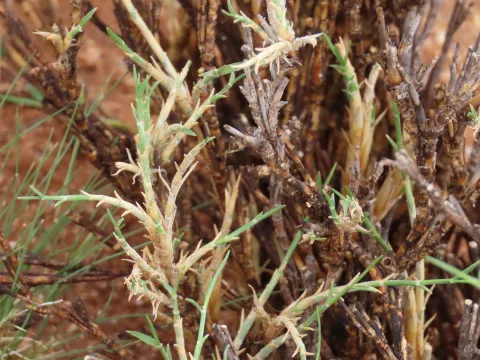
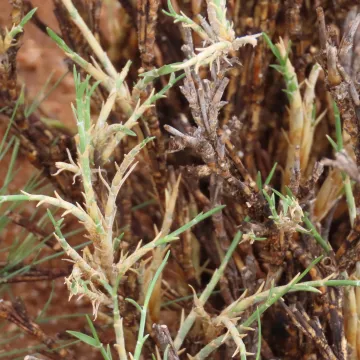
Botanically, the plant is characterized by its compact morphology and specialized short leaves designed to minimize water loss. The root system is deep and extensive, which is not only essential for nutrient and water uptake in sandy, nutrient-poor soils but also plays a critical role in anchoring shifting sands and stabilizing the substrate.
In terms of agrotechnology, Stipagrostis brevifolia is not typically cultivated in a traditional sense but is managed within rangeland systems. It is highly sensitive to overgrazing, requiring controlled grazing practices to maintain its productivity. The plant thrives in well-drained, sandy soils where competition from other vegetation is low due to limited resources.
The primary economic use of this grass is as forage for livestock in arid environments. Furthermore, it is of immense value in soil conservation and land reclamation projects. By binding sandy soils, it mitigates the effects of wind erosion and helps combat desertification, making it a key species for ecological restoration in drought-prone areas.
- Extreme resilience to heat and drought.
- Excellent soil-binding properties.
- Adaptation to nutrient-deficient sandy soils.
Photo gallery