Stokes' Aster
Stokesia laevis (Hill) Greene
Description
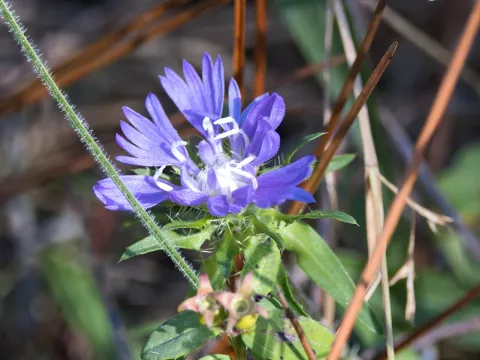
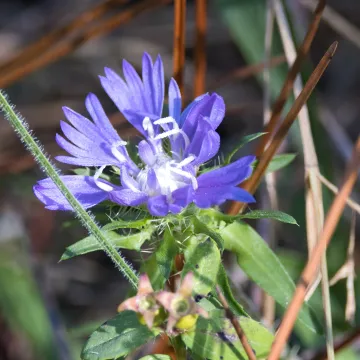
Stokes' Aster (Stokesia laevis) is an herbaceous perennial plant belonging to the Asteraceae family. It is the sole species in its genus, recognized for its striking, thistle-like flowers and ornamental potential in garden landscapes. This plant stands out for its unique flower morphology, featuring deeply fringed petals that offer a sophisticated aesthetic.
Originating from the southeastern United States, this species is native to pine woods and damp, open areas. Because of its natural habitat, it thrives in environments that provide consistent moisture while remaining well-drained. Its adaptability to various zones has made it a popular choice for gardeners seeking resilient, high-impact floral displays in temperate regions.
Botanically, Stokes' Aster grows in a rosette pattern with lance-shaped, evergreen-to-semi-evergreen leaves. The flowering stalks emerge in summer, topped by large, blue, violet, or white flower heads. The foliage is thick and leathery, which provides a clean base for the vibrant blooms, typically appearing from mid-summer until early autumn.
Cultivation requirements necessitate well-drained, fertile soil with a neutral to slightly acidic pH. While the plant can tolerate light shade, it produces the most abundant blooms in full sun. Essential agronomic practices include avoiding overhead watering to prevent fungal issues and applying a layer of mulch in colder climates to protect the root system from freezing and thawing cycles.
The primary economic and horticultural use of Stokesia laevis is in the landscaping and floriculture industry. It is widely planted in borders, rock gardens, and mass plantings for its long-lasting blossoms. Furthermore, it serves as a high-quality cut flower, prized for its vase life and distinctive texture in professional floral arrangements.
- Requires excellent drainage to prevent crown rot in winter.
- Benefits from deadheading to encourage repeat blooming.
- Susceptible to aphids and slug activity in humid conditions.
- Best propagated through division in spring or autumn.
Photo gallery